President Trump announced a deal with Iran yesterday saying in part, "Ships of the World, start your engines. Let the oil flow!" But what is good news for the rest of the world is definitely bad news for President Putin.
Oil prices on Monday fell to their lowest level since March after U.S. officials announced an agreement between the United States and Iran.
West Texas Intermediate futures price, the benchmark index for U.S. trading, registered at about $80.40. That figure, which amounted to a 5% drop on Monday, marked the lowest price since March 5, just a week after the outbreak of the Iran war.
It's still going to take several months, maybe until the end of the year, to see crude prices return to the levels they were at in February, but the trajectory between now and then should be downward. And that means the premium Russia was briefly collecting for its oil is going away.
On top of that, Europe is finally getting a bit more aggressive about stopping Russian shadow fleet tankers. Over the weekend the UK seized a tanker in the English channel for the first time.
Sunday's operation, which saw commandos fast-roping from a helicopter on to the tanker, was the first of its kind carried out by UK armed forces.
Russia uses hundreds of oil tankers sanctioned by the UK and other Western states over its invasion of Ukraine.
British sanctions ban vessels from this "shadow fleet", as it is known in the West, from entering UK ports and also prohibit British firms and individuals from providing financial, insurance or brokerage services to ships that supply or deliver Russian oil...
It began its journey on 5 June from Russia's Ust-Luga port, an oil terminal near St Petersburg, before crossing west into the Channel on Saturday, BBC Verify has found.
The vessel was sanctioned in July 2025 and has since changed its name from Myrtos to Smyrtos as well as the flag it sails under twice.
There are hundreds of these Russian tankers flying flags from other nations, so seizing one isn't a game changer. Still, even stopping a small percentage of them puts a big dent in Russia's bottom line.
Watch: Royal Marine Commandos board the sanctioned Russian shadow fleet tanker SMYRTOS in the Channel, in the first UK-led operation of its kind, backed by HMS Sutherland, HMS Ledbury and an RAF P-8. The vessel is now held off the south coast as investigations continue. pic.twitter.com/omTnGlh3gk
— UK Defence Journal (@UKDefJournal) June 14, 2026
It appears other shadow fleet tankers are getting the message that the English Channel is closed.
About 8 hours after shadow tanker SMYRTOS was seized by UK three other shadow tankers made abrupt turns within an hour of each other, avoiding going through the English Channel.
— auonsson (@auonsson) June 14, 2026
Home base called I assume. All ships in screenshots are sanctioned. pic.twitter.com/ibAo466lW1
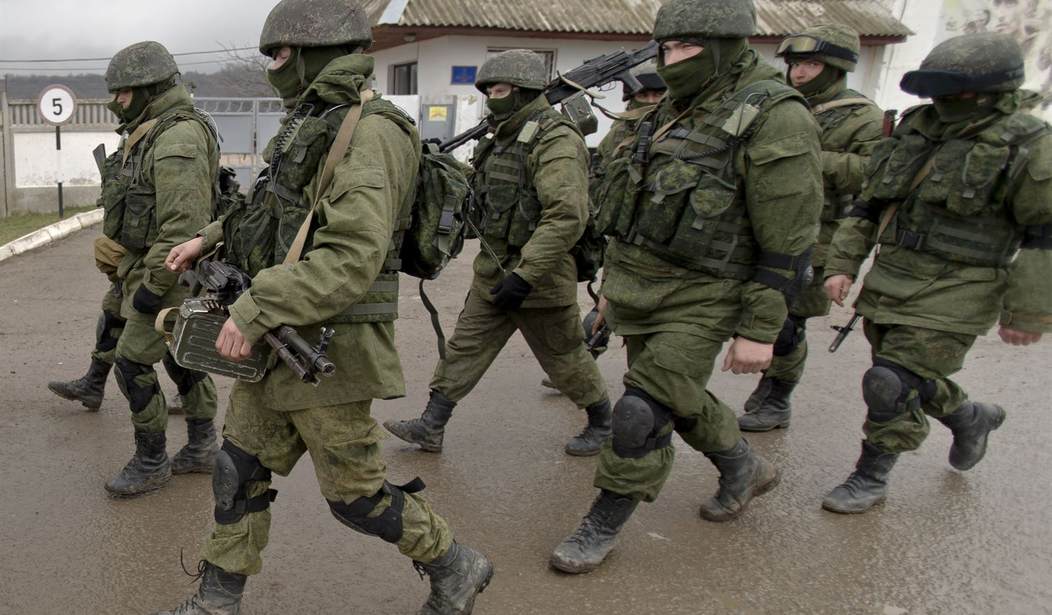
The bottom line is increasingly a problem for Russia because, so far, Putin has chosen to recruit new soldiers by offering big bonuses rather than by drafting people by force. And yet, recruiting is trending downward.
What would you do with an $80,000 bonus, more than quadruple the amount of an average annual salary? Or with $140,000 in debt relief?
Those are the questions being posed to men in Russia, as the military advertises multi-million-ruble incentives to fight in Ukraine. Ads plastered on roadside billboards and embedded in young men’s social media feeds are offering eye-watering sums – more than many people earn in years – alongside promises to become a “hero” or be fast-tracked to Russian citizenship.
And yet military recruitment was down by 20% in the first quarter of this year compared to 2025, and there are signs it’s still faltering, according to Russian economy expert Janis Kluge.
The cost of those bonuses makes up a significant portion of government spending so any cuts to oil sales could have a direct impact on Russia's ability to continue or expand those payments.
Some experts, including Maria Snegovaya at the Center for Strategic and International Studies, think the Kremlin can muddle through its recruitment issues by putting more pressure on the regions outside of major cities like Moscow, pushing students to sign military contracts and recruiting more foreign nationals...
Economically, though, “the strain is becoming increasingly visible,” Snegovaya told CNN. “This year in particular we see the economic costs finally imposing difficult tradeoffs on the Kremlin.”
She noted that “the fiscal burden of sustaining the war effort” has increased, given that Russia’s military personnel and recruitment costs account for tens of billions of dollars each year, amounting to 9.5% of total federal budget and 2% of the country’s GDP by some estimates.
Russia's strategy in Ukraine, at least since it became clear they would not seize Kyiv in a matter of days, has been to outlast Ukraine. Russia's main advantage was it's size. It simply had more manpower to keep sending troops to the front lines. But recent trends in recruitment and casualties of up to 30,000 soldiers per month make that plan look flawed. Sending waves of cannon fodder at the enemy is not working anymore.
And that means Putin could soon be facing a difficult choice. Either he needs to institute some kind of new mobilization to force more soldiers to the front lines or he needs to scale back his plans in Ukraine. Either one will be hard to justify to a domestic audience who've been told for four years that a win is inevitable.
Editor's Note: Do you enjoy HotAir's conservative reporting that takes on the radical Left and woke media? Support our work so that we can continue to bring you the truth.
Join HotAir VIP and use promo code FIGHT to receive 60% off your membership.










Join the conversation as a VIP Member