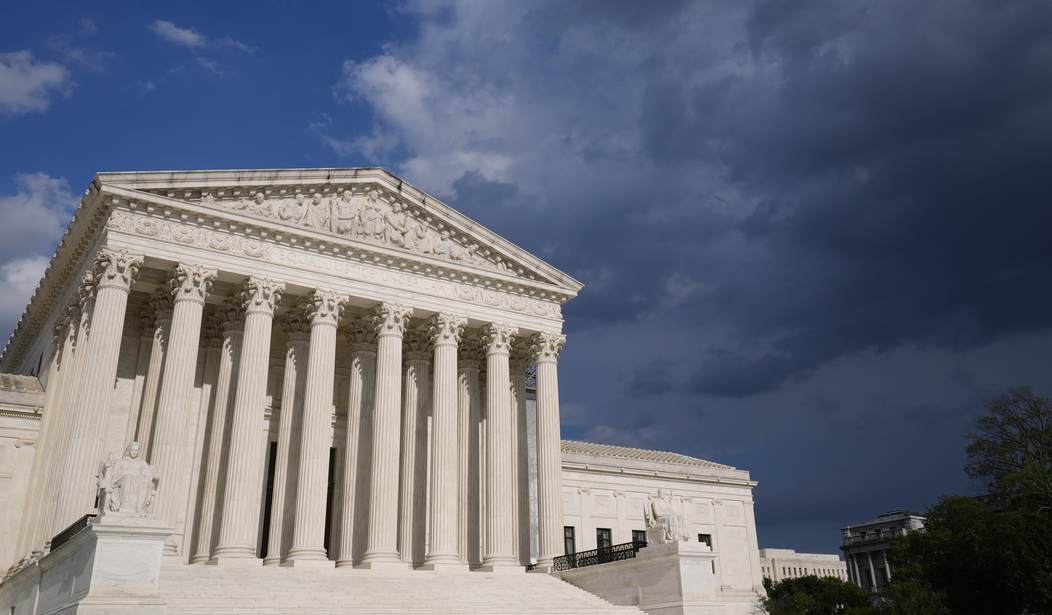
A panel of three federal judges in Alabama has decided that the state may not use a disputed 2023 map for the 2026 elections, potentially erasing a one seat pick-up for the GOP in this year's elections.
A three-judge panel on Tuesday blocked a Republican-drawn congressional map in Alabama from going into effect, writing that the district lines “intentionally discriminated based on race in violation of the Constitution.”
“We cannot see our way clear to requiring Alabamians to cast their votes in the 2026 elections under a districting plan tainted by intentional race-based discrimination,” the panel of federal judges wrote.
The decision is a setback for Republicans, who sought to enact the map after a major redistricting ruling from the U.S. Supreme Court last month. The map would eliminate one of Alabama’s two majority-minority districts, putting the GOP in position to gain a seat in this year’s midterm elections.
There are seven congressional districts in Alabama, five held by Republicans and two by Democrats. The 2023 map would likely flip one of those Democratic districts, making it a 6-1 map in favor of the GOP. However, the map has been held up in court because the district in question is a black opportunity district. The court had previously ruled that eliminating that district was racial discrimination and in 2023 the Supreme Court agreed in a 5-4 decision in which Chief Justice Roberts and Justice Kavanaugh joined the court's three liberals.
Chief Justice John G. Roberts Jr., who has often voted to restrict voting rights and is generally skeptical of race-conscious decision making by the government, wrote the majority opinion in the 5-to-4 ruling, stunning election-law experts. In agreeing that race may play a role in redistricting, the chief justice was joined by Justice Brett M. Kavanaugh and the court’s three liberal members, Justices Sonia Sotomayor, Elena Kagan and Ketanji Brown Jackson.
Voting rights advocates had feared that the decision would further undermine the Voting Rights Act of 1965, a central legislative achievement of the civil rights movement whose reach the court’s conservative majority has eroded in recent years. Instead, the law appeared to emerge unscathed from its latest encounter with the court.
That was three years ago. Last month, the Supreme Court did undermine Section 2 of the VRA with the Callais decision. That decision seemed to make it clear that not state was required to maintain majority minority districts. Instead, parties could draw maps that eliminated such districts so long as the motive was political not racial. That led Alabama lawmakers to attempt to return to the 2023 map in hopes of gaining one more GOP seat in the midterms.
In fact, two weeks ago the Supreme Court seemed to clear the way for Alabama to return to use of this map.
The justices threw out the lower-court order barring Alabama from using the map, which it had adopted in 2023, and sent the dispute back to the lower court for another look.
Justice Sonia Sotomayor dissented from Monday’s decision, in a four-page opinion joined by Justices Elena Kagan and Ketanji Brown Jackson. In her view, the court’s order was “inappropriate and will cause only confusion as Alabamians begin to vote in the elections scheduled for next week.”
So, two weeks after the Callais decision, Alabama asked for permission to use the 2023 map and the Supreme Court said yes in a 6-3 decision, sending the case back to the lower court that had blocked it. That court has now decided, once again, that the map is racially discriminatory under section 2 of the VRA. The decision reads, "Our earlier constitutional analysis and conclusion, on the same record that is before us now, are undisturbed by Callais." They are ordering the state to instead use the 5-2 map that was used in the 2024 election.
The state plans to appeal this to the Supreme Court which clearly seems to have changed its mind about this issue since 2023, but the panel of judges is pushing back and creating a time crunch which they use to argue is also a problem for using the new election maps.
We'll have to wait and see how quickly the Supreme Court jumps on this. It would be odd for them not to take this up given their decision to vacate the same outcome two weeks ago.
Editor’s Note: The 2026 Midterms will determine the fate of President Trump’s America First agenda. Republicans must maintain control of both chambers of Congress.
Help HotAir continue to report on the Democrats’ radicalism and inform voters as our nation faces a crossroads. Join HotAir VIP and use promo code FIGHT to receive 60% off your membership.












Join the conversation as a VIP Member