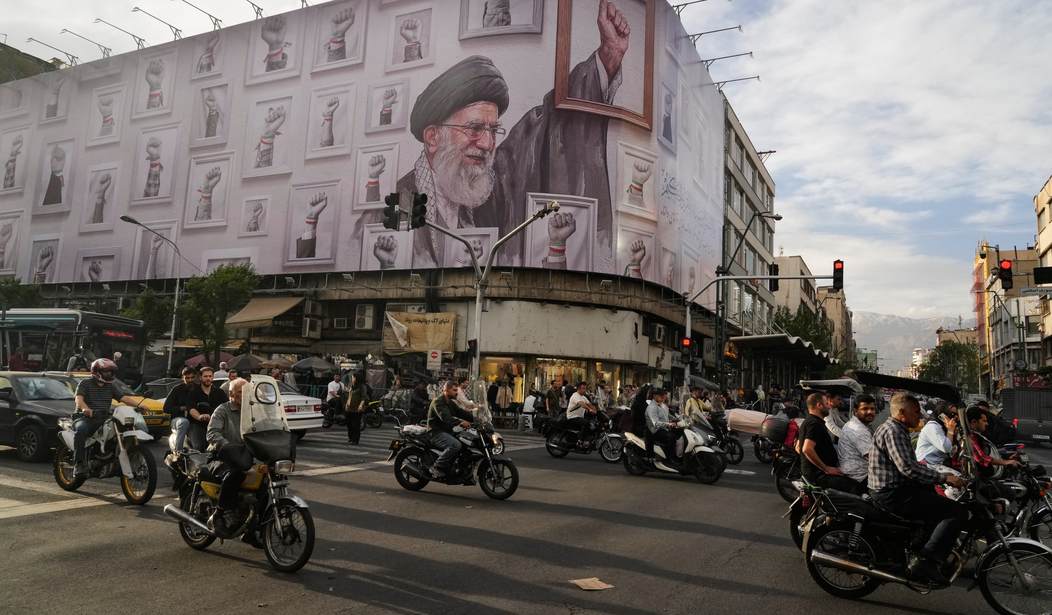
Consider the answer to this question a Rumsfeldian "known unknown."
Duane referred to the known unknowns and the unknown unknowns in the Memorandum of Understanding (MOU) with Iran this morning. Most of the acute questions around both involve the motives of the IRGC, whether Hezbollah will attempt to continue the war, the capability of the Lebanese government to disarm the IRGC proxy army, and, of course, the Strait of Hormuz, about which more in a moment.
One particular frustration with the announcement yesterday relates to the initial promise from Donald Trump that "help is on the way" to the Iranian people. The IRGC regime massacred tens of thousands of Iranians in early January after a currency collapse prompted a popular uprising. Part of the rationale for the war from both Trump and Benjamin Netanyahu was to free the people from the regime. Both spoke explicitly of a time at which the Iranians could rise up and take back their country. Instead, the US and other Gulf states have cut a deal with the oppressors, although Netanyahu clearly has been forced into accepting it.
Is that the end of a popular uprising? Or is it the beginning? The leader of one major Iranian resistance group argues that it's the latter. Maryam Rajavi, the president-elect of the National Council of Resistance of Iran (NCRI), put out a statement yesterday in support of the MOU. The end of the war, Rajavi argues, is what will finally allow a popular uprising to succeed:
The Iranian Resistance, which for nearly five decades has sought freedom and peace, welcomes any understanding to end the war and the suffering of the Iranian people. In Iran, no one except the remnants of the mullahs and the Shah has wanted or wants war.
The effort to produce nuclear weapons, warmongering, and meddling in the countries of the region are part of the survival strategy of the religious fascism ruling Iran, and it will not abandon them as long as it can. War is this regime’s shield against popular uprisings, while peace and a ceasefire are, as Khomeini put it, like “poison” for it. The overthrow of the regime is the responsibility of the Iranian people and their organized Resistance.
Mrs. Rajavi added: I reiterate once again that any international agreement to end the war must include an end to the execution of political prisoners and the killing of protesters.
Color me a bit skeptical, although Rajavi is absolutely correct that regime change has to come from within. The US is not going to send the millions of troops necessary for a Germany 1945 model of destruction of the regime, and the Japan 1945 victory strategy is unthinkable. The current regime in Iran is every bit as intractable as the Nazis and the Bushido cult that ran Imperial Japan, but the US does not have the will for those options, or anything even close to it. The only other option would be a massive coordinated invasion by the Gulf states Iran attacked over the last four months, but none of them would be even vaguely interested in an invasion of a country the size of Iran.
The problem with a new uprising, though, is that the IRGC still controls all of the weapons and has not gotten more shy about using them for brutal repression. The end of the Hormuz crisis means that the regime will get its oil revenues restored soon, assuming they don't try to reimpose fees or tolls on international waters. At the moment, traders are betting that Iran will comply and that the bilateral blockade in the Strait will come to an end this week:
U.S. stock indexes jumped in early trading, with the tech-focused Nasdaq gaining more than 2%, following gains in Europe and Asia. Major oil-importing economies—including Japan, South Korea and the Philippines—led the surge, with major indexes tied to each country rising 5% or more.
Brent crude futures plunged nearly 5% to trade around $83 a barrel, on track for its lowest close since the earliest days of the war. WTI crude, the U.S. benchmark, fell 5%. European natural-gas prices tumbled.
Global bond yields retreated as lower oil prices eased concerns about inflation. In the U.S., investors pared back expectations of an interest-rate rise this year. The dollar weakened.
The moves are accelerating trades that had already started to loosely take shape over the last few weeks as President Trump repeatedly teased progress toward a deal. Still, analysts warned that the pact is by no means buttoned up. The deal isn’t due to be signed until Friday and thornier issues like Iran’s nuclear program are believed to be pushed into a later round of talks.
A new influx of income into the IRGC will go immediately to shoring up its command-and-control functions, followed by repairs to its military-industrial infrastructure. The regime will get strengthened in the short term with an end to hostilities, at least until the next crisis arrives when it has to cough up the uranium.
However, Rajavi makes a very good point about the pressures after the end of hostilities. The Iranian economic collapse has not gone away, and the IRGC is unlikely to spend its revenue to ameliorate it. Without an active war occupying their lives, the Iranian people will want immediate changes to improve their economic conditions, and the IRGC is not going to be able to do much about it. The regime will focus more on internal security for its own survival, and likely prioritize rebuilding Hezbollah and Hamas over rebuilding Tehran or dealing with its near-existential water crisis.
At some point, the collapse will create unbearable economic stresses and pressure on the regime. It nearly cracked five months ago, and that's when its top tier of leadership was still in control. Two or three rounds of decapitation have left the regime in the hands of the less competent thugs rather than the experienced strategists and the mullahs that gave their regime a patina of divine authority. A renewed uprising, perhaps with the help of the Gulf states that finally got a lesson in the dangers of appeasement, has a better chance of success against the JV, especially when the JV will be fighting with each other over the humiliations of the war.
Of course, this is one reason not to put much stock in the MOU. Once the regime recognizes its existential vulnerability, the JV will return to war to justify the misery of the people. Whether that will succeed will depend on the determination of the Trump administration in enforcing the terms of this agreement, whatever they happen to be.
Editor's Note: For decades, former presidents have been all talk and no action. Now, Donald Trump is eliminating the threat from Iran once and for all.
Help us report the truth about the Trump administration's decisive actions to keep Americans safe and bring peace to the world. Join HotAir VIP and use promo code FIGHT to get 60% off your VIP membership.







Join the conversation as a VIP Member