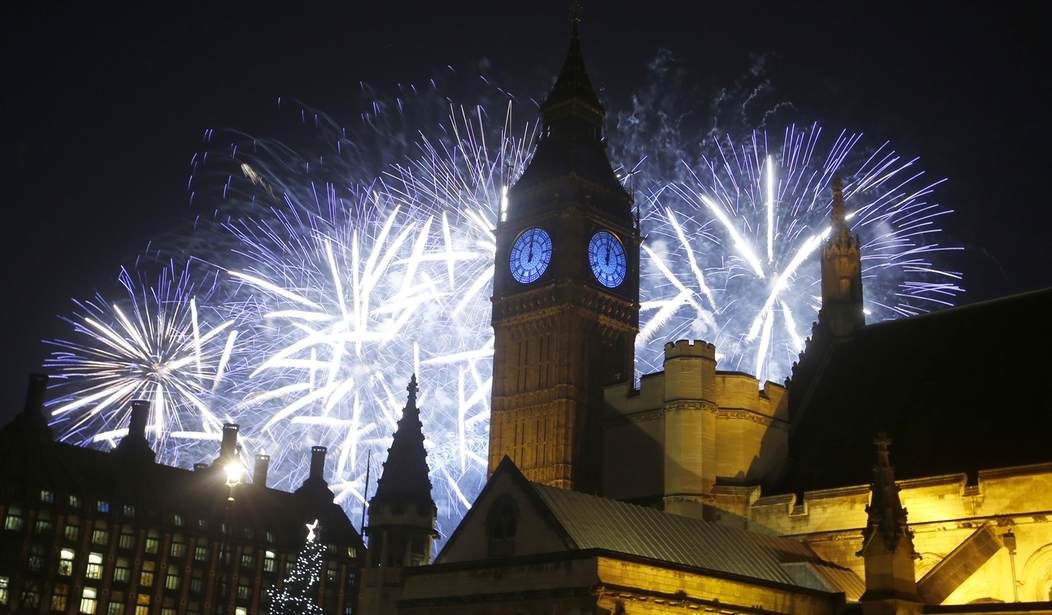
Seriously. Is this any way to run an island?
I'd be embarrassed. And having to beg the French, no less.
UK Grid Seeks Emergency French Power to Secure Supplies
Britain’s grid operator sought emergency assistance from France on Monday evening, requesting as much as 1,200 megawatts of additional electricity through an undersea interconnector to help maintain the security of the power system.
The National Energy System Operator made the request after the return to service of a power-system asset was delayed, reducing the network’s available capacity Monday afternoon, according to a post on X.
NESO has been making greater use of day-ahead restrictions of interconnectors in order to ensure there is sufficient supply of electricity in Britain following an incident in June when the grid faced unusual strain while it was exporting power to neighboring countries. The action Monday was taken with a different tool to ensure power supplies with a few minutes notice, according to market messages.
Whatever that unidentified 'power asset' was, it reduced the capacity of the network so much that, thanks to an overabundance of wind, they were already curtailing some of the turbine output, and the National Energy System Operator (NESO) was forced to contact the French to solicit up to 1,200 MW in emergency power through the trunk lines to keep the British grid stable, after an earlier 700 MW request.
So, there were two separate emergency requests on what was basically a pretty normal usage-parameter day. NESO had been forced to curtail wind exports because they were producing too much, and it threw the whole balancing act out of whack.
And another one...this time for 1200 MW NESO has now requested just under 2 GW of Emergency Assistance from our neighbours on a windy autumn day when demand is doing nothing unusual and nothing tripped....why? @Miatsf @mgshanks @AndrewBowie_MP @ClaireCoutinho @HarrietCross_MP @drlukeevans @Ashley7Fox @TiceRichard @cmackinlay @DavidGHFrost @mattwridley @Iromg @AllisonPearson @EdConwaySky @afneil @CitySamuel @mattotele @Jonathan__Leake @energygovuk
— Kathryn Porter (@KathrynPorter26) October 12, 2026
Get it?
Curtailing 17 GW of wind while importing 2 GW of emergency power is not grid management. It is the symptom of a network that cannot move its own generation. SE congestion is the obvious suspect. NESO owes us a public explanation.
And all the shuffling of hundreds of MW of power to balance this or that in the unstable British grid costs some real money which only comes from one place - that poor abused British customer.
@neso_energy paying £1000 /MWh in the Balancing Mechanism Crazy @Miatsf @mgshanks @ClaireCoutinho @AndrewBowie_MP @griffitha @harrietc @ColinMoynihanUK @drlukeevans @ashley7fox @TiceRichard @cmackinlay @DavidGHFrost @mattwridley @Iromg @AllisonPearson @MerrynSW @EdConwaySky @afneil @mattotele @jonathan_leake @julietsamuel @energygovuk
— Kathryn Porter (@KathrynPorter26) October 12, 2026
The average British consumer still hasn't seen the 'more affordable' part of the renewable promise sold to him by his climate-cult-captured politicians.
And the price of British energy is where globally? https://t.co/A2Y8KKFF70
— David | Fink | Markets Talk, We Translate (@Fink_Money) September 26, 2026
The price just keeps going up.
They're starting to call it 'Blackout Britain,' the struggle to keep the lights on in a fever-dream system.
Blackout Britain: Why running out of gas isn’t the only threat this winter
As warnings grow that the UK could run out of gas by the end of winter, Lydia Spencer-Elliott examines the other pressures on the systems that keep the UK’s lights on
...That energy shifted a little recently, after reports that Britain risks running out of gas stockpiles by end of winter, which – in a worst case scenario – could lead to rationing, where large industrial users, like power plants, have their supplies restricted.
...A new report from Europe’s gas transmission operators said that, if the UK faces a harsh winter, storage facilities could be completely depleted in a matter of months. Meanwhile, EU backup gas storage facilities, which Britain relies on for support when supplies fall short, are also running low. If we import from America, household bills prices will soar even higher.
Although households would most likely be protected from cuts to their gas supply, as it’s complicated to turn on and off, they’d be more likely to experience blackouts due to gas power stations having their supply cut.
This, in combination with the new laws introduced this summer where grid operator Neso was given powers to pull the plug without government authorisation to avoid widespread blackouts when power supplies run low, could mean we’re looking down the barrel of hours long rolling blackouts to prevent total system collapse.
Preventing a total system collapse would seem to be a logical priority, but it's not an easy one thanks to who is running the country.
You can have windmills, open hostility to fossil fuels, not spend a dime on improving grid infrastructure, and still expect to open data centers to keep a shaky economy sputtering along.
Something's got to give.
...Paul Ekins, professor of energy and environment policy at University College London, chalks the UK’s energy wobble down to three elements: The country’s transition to clean energy (renewables generated over half of the UK’s power for the last two years), policymakers being so focused on generation that they took their eye off the ball of the modernisation of the grid, and the increasing quantity of AI data centres springing up across the UK, which were reported to be consuming 6 per cent of the UK’s electricity in May.
Ofgem announced in February that more than 140 data centres had come forward seeking grid connections, with some requesting more than 50 gigawatts of capacity. If these plans went ahead, data centres would use more electricity than the entire rest of the country. “I’m not sure how sustainable that is,” says Ekins. “Not just environmentally, but in terms of power.”
And, naturally, most wind generation happens in the Scottish Highlands, where the fewest people live, so it's wasted. There's no way to get it where it's needed, but they keep putting turbines up there anyway instead of figuring that part out.
...Britain has already spent £1bn this year on wasting homegrown wind power, which could’ve provided energy to millions of homes, data from the Wasted Wind tracker showed earlier this month. “The way Britain’s electricity system is run is bonkers,” said Octopus Energy’s chief executive, Greg Jackson, in a statement after Britain passed the £1bn milestone. “You wouldn’t grow tomatoes in your garden, only to bin them and buy expensive, imported ones from the shop,” he said. “So, why are we doing the same thing with electricity?”
By 2030, wasted wind power could generate 6.8 million tonnes of emissions and cost the country £3.5bn, increasing average annual household electricity bills by nearly £200, the financial think tank Carbon Tracker warned in 2023, urging policymakers to prioritise investing in grid modernisation to keep up with wind power advancements.
Well, besides calling France when the UK has too much wind power and not enough dispatchable, stable electrical power.
The British renewable subsidies have already swallowed, as the fellows in the video further down say, a 'colossal' amount of money.
"Britain is now the global leader in energy costs, with among the most expensive energy in the developed world. No amount of tinkering with bills will change these costs. A temporary VAT cut, some public money into a new Great British Grid and switching some subsidies from customers to taxpayers does not alter the costs. Nor do industrial energy subsidies. Rearranging the deckchairs will not make these high costs go away. They are locked in through to the end of the 2030s." @Dieter_Helm #CostOfNetZero
— Net Zero Watch (@NetZeroWatch) October 5, 2026
...A temporary VAT cut, some public money into a new Great British Grid and switching some subsidies from customers to taxpayers does not alter the costs. Nor do industrial energy subsidies. Rearranging the deckchairs will not make these high costs go away. They are locked in through to the end of the 2030s." @Dieter_Helm
Those in charge have also allowed the fossil-fuel supply stocks that keep the entire Ponzi scheme alive to dwindle to nothing, and there's still no stopping the march to NetZero madness.
As one guy in this video says, it's like having fifty miles worth of diesel in your car, but the next petrol station is 60 miles away.
£240 BILLION on Net Zero: Britain's Energy Trap EXPOSED - Full Throttle https://t.co/NCphs74EXP
— Lembit Öpik (@lembitopik) October 12, 2026
That's what they've done to the country.
The awakening is going to be a rude shock. Even ruder than the electrical bills are right now.
...“You don’t realise how much you use electricity until it’s gone,” says Murray.
Quite the deduction, Sherlock.
The reality will bite.
Editor’s Note: Thanks to President Trump’s leadership and bold policies, America’s economy is back on track.
Help us continue to report on the president’s successes and combat the Democrats' lies about America's economic revival. Join HotAir VIP and use promo code FIGHT to receive 60% off your membership.











Join the conversation as a VIP Member