In the late 19th and early 20th centuries, when the "car" was still the "horseless carriage", city governments in the industrialized world, noticing that the puttering of internal combustion engines (or the huffing and puffing of steam cars, or the silent gliding of the era's electric ones) scared the bejeebers out of the horses that were still the main users of the era's roads.
In a rare example of government accountability from a time when government was smaller and less detached from reality, these laws were all scrubbed from the books by the early 1900s. It was a simpler age, and one with a certain amount of reason governing government.
So while people still laugh at the Luddite application of law in that simpler age, make no mistake — that impulse to try to exert control over change, if necessary by trying to repeal reality and reason, is still very much alive.
Right now, the self-driving car is likely about where the "horseless carriage" was around 1900 — just starting to creep into the market. Still an attention-getter. Still mildly alarming. And still polarizing — with pencil-necked geeks assuring us it'll make traffic safer, people like me who just love to drive, especially out on the open highway planning to be very late adopters...
...and city governments like Minneapolis still channeling that "put a flag-man out front" impulse — in this case, by advancing a law requiring "self-driving cars" to have...a human in the vehicle monitoring it.
To put it less obliquely — the driverless cars must have a driver.
Of course, this time it's not so much about protecting other traffic as it is protecting constituents, as Minneapolis DSA City Councilwoman Robin Wonsley declaims:
Workers Drive Minneapolis, our ordinance establishing basic protections for workers and residents as autonomous vehicle companies prepare to enter our city, is headed to a final vote and this Thursday, we’re set to make history. pic.twitter.com/UIZ3F0Bf1l
— Robin4mpls (@robin4mpls) September 30, 2026
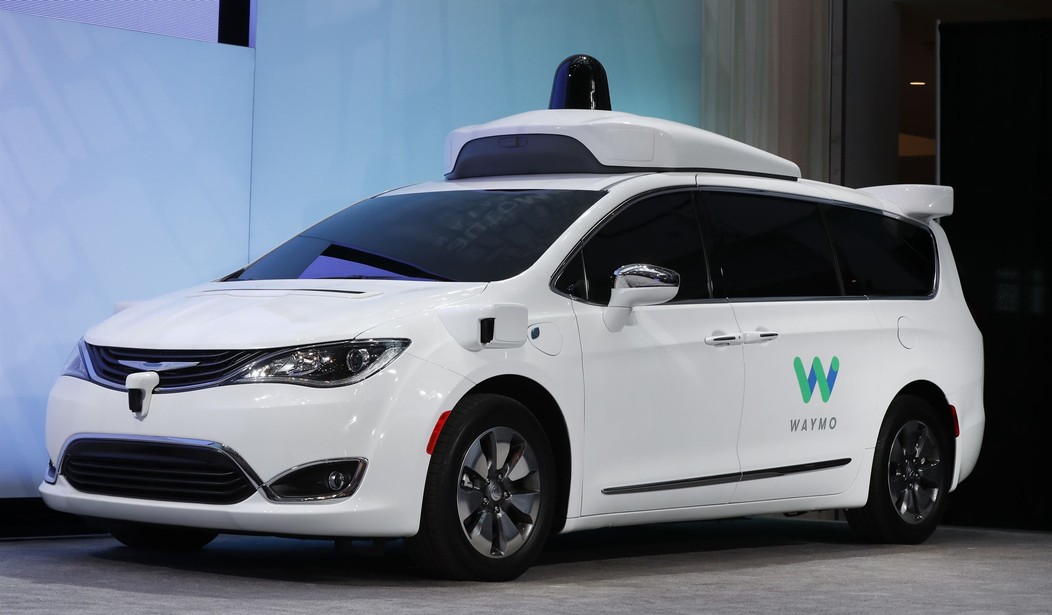
So, is the city concerned about all those other drivers and cyclists, who might get alarmed by the odd-looking cars with the cameras and sensors on top, looking like something out of Star Wars, and I don't mean the George Lucas ones?
Well, no.
In this case, the constituents are rideshare drivers, the city's thousands of largely immigrant, heavily Somali drivers that drive most of the Ubers and Lyfts (after gutting the taxi business, which in turn had been taken over in succession by Russians and then Somalis, back in the 2010s).
They weren't even especially coy about it:
This was the city presentation rationale for protecting the world from Waymo.
— Becka Thompson (@becka_thompson) October 1, 202
What are your questions? pic.twitter.com/lDzOsE0oY9
The Minneapolis City Council voted 7-4 to advance a proposal on Tuesday to require human “safety monitors” earning minimum pay rates in the drivers’ seats of autonomous robotaxis like Alphabet’s Waymo and Amazon’s Zoox.
The proposal aims to protect the jobs of the state’s roughly 10,000 rideshare drivers, the majority of whom are Black and immigrant men, according to a 2024 state study.
Its authors say the proposal is part of a larger fight against Big Tech rolling into cities in regulatory gray areas — as Uber and Lyft did a decade ago — and the widespread job losses many fear from artificial intelligence, from Uber drivers to coders to lawyers.
“(Tech companies) do displace. They do exploit. And without measures like what we’re taking up today, we will experience the collateral and negative impacts of technological advances,” said City Council Member Robin Wonsley, the chief author of the ordinance.
They'll be deciding very shortly, as this is written:
Minneapolis City Council could make a big decision Thursday to put strict limits on driverless cars, such as Waymo, including a requirement that a human must sit behind the wheel at all times. READ MORE at the link in bio. pic.twitter.com/5AJRINoZos
— KSTP (@KSTP) October 1, 2026
Now, if you're a Minneapolis resident or Minnesota taxpayer, you might wryly joke that those "monitors" will be provided by non-profit, run (at a healthy markup) by some DFL-favored community figure or another.
And there's no funny punch line to that. That's probably what'll happen.