There was a time not that long ago when using the internet on a flight was a real pain. You had to pay extra for the service and then make your way through some kind of portal in order to get sometimes spotty access.
That all changed in 2023 when Delta Airlines made internet service free on most of their domestic flights. Other carriers soon followed. The service still involved a portal (and signing up for a loyalty program) and it's still sometimes laggy and slow, but at least it didn't cost extra.
Meanwhile, Starlink began to enter the market and today it dominates the industry for internet access on airlines and cruise ships. United, Southwest, Alaska and American airlines have all signed up with Starlink because it allows them to offer much faster, more reliable access.
There's really only one major U.S. airline that has turned down Starlink at this point and that's Delta. Earlier this year, Delta signed an agreement for next-level in-flight internet access with Amazon Leo:
Delta will harness Amazon Leo’s cutting-edge satellite technology to bring more fast, personalized digital experiences on board Delta’s domestic and international flights, like streaming movies and TV shows, listening to podcasts and audiobooks, staying connected to friends, family, colleagues and more. The unmatched upload capacity of Amazon Leo enables customers to instantly share life moments — from uploading vacation photos and videos in real time to securely sending presentations or business files after a high-stakes meeting — without waiting until they land. The global airline plans to introduce Amazon Leo with an initial installation on 500 aircraft beginning in 2028, elevating the Wi-Fi experience with Amazon’s advanced low Earth orbit satellite communications network.
So the rest of the industry is basically already building out Starlink access on all their flights and Delta is promising to start doing so in 2028. That's because, at present, Amazon Leo only has 396 satellites in orbit. In order to make the network fully functional, Amazon plans to boost that to 3,236 satellites but that's obviously going to take time. Jet Blue is expected to start using the service sometime next year and Delta will follow a year later.
Delta's decision to choose an Amazon network that isn't even fully built out yet over Starlink seems to be based on Delta CEO Ed Bastian's personal dislike of Elon Musk. He was recently quoted saying, "We do not want to be with Elon Musk. Trust me."
Musk has responded by suggesting Bastian will lose his job over the decision.
He will lose his job over this
— Elon Musk (@elonmusk) September 30, 2026
In addition to the personal issue, Delta apparently wanted to place its branding/portal over the Starlink access and Musk refused to let them.
Not exactly. SpaceX requires that there be no annoying “portal” to use Starlink.
— Elon Musk (@elonmusk) May 13, 2026
Starlink WiFi must just work effortlessly every time, as though you were at home.
Delta wanted to make it painful, difficult and expensive for their customers. Hard to see how that is a winning…
Other carriers are trying to leverage their Starlink access to get people to switch from Delta and Musk is trying to help them.
Delta will lose a lot of customers
— Elon Musk (@elonmusk) September 29, 2026
For anyone suddenly reconsidering their airline loyalty: we can match your status and keep you connected at 35k feet with Starlink soon. 👀 https://t.co/RMckeGVoPH
— americanair (@AmericanAir) October 1, 2026
They can keep doing this for the next two years. Will it have an impact? I guess we'll find out. Meanwhile, Musk continues to hammer Delta.
Best way to sandbox an AI is to put it on a Delta flight – it will have no chance of accessing the Internet!
— Elon Musk (@elonmusk) September 30, 2026
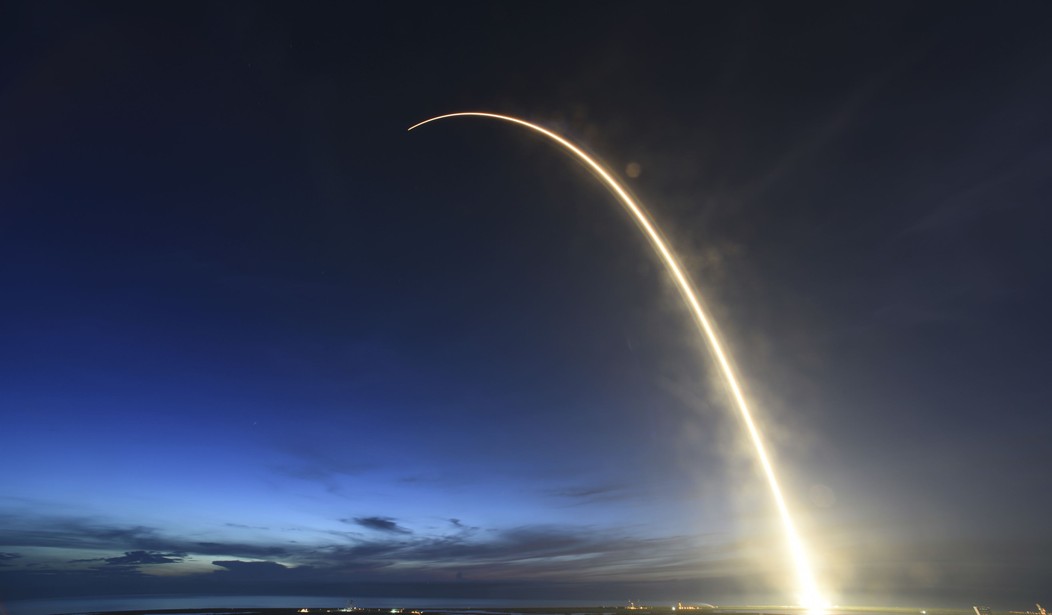
In the long run it's probably good for the market to have two or more companies competing for the satellite internet business. But at present Musk is very far ahead of the competition. He has more than 11,000 active satellites in orbit and just this week launched the first working V3 satellites on Starship.
Views from of one of the first 26 Starlink V3 satellites successfully deployed to orbit by Starship
— Starlink (@Starlink) September 28, 2026
Thanks for the ride, @SpaceX! pic.twitter.com/B2SSUA0N0q
Starlink already has about 13 million subscribers worldwide, 2.7 million in the United States. Starlink needs about 1,000 of these V3s in orbit, at which point the network's global bandwidth should triple or quadruple allowing for many more customers. It believes it can get there within a year as each Starship launch can carry up to 60 of these. So about 18 more launches and they could reach that critical number of roughly 1,000 satellites.
The scale of SpaceX satellites is getting absolutely insane
— X Freeze (@XFreeze) October 1, 2026
Each generation roughly doubles or more in deployed size
Starlink V1.5: ~11 m
V2 Mini: ~30 m
V3: ~60 m
AI1: ~75 m wingspan - first-generation orbital AI compute satellite pic.twitter.com/g4prKpM8FJ
About five to six years ago I read a lengthy blog post by someone who argued Starlink would definitely fail because the network would lose money on every new customer. At the time, the argument sounded plausible, but obviously it was very wrong. Starlink made more than $4 billion in profit last year. Never bet against Elon.
Editor’s Note: Thanks to President Trump’s leadership and bold policies, America’s economy is back on track.
Help us continue to report on the president’s successes and combat the Democrats' lies about America's economic revival. Join HotAir VIP and use promo code FIGHT to receive 60% off your membership.










Join the conversation as a VIP Member