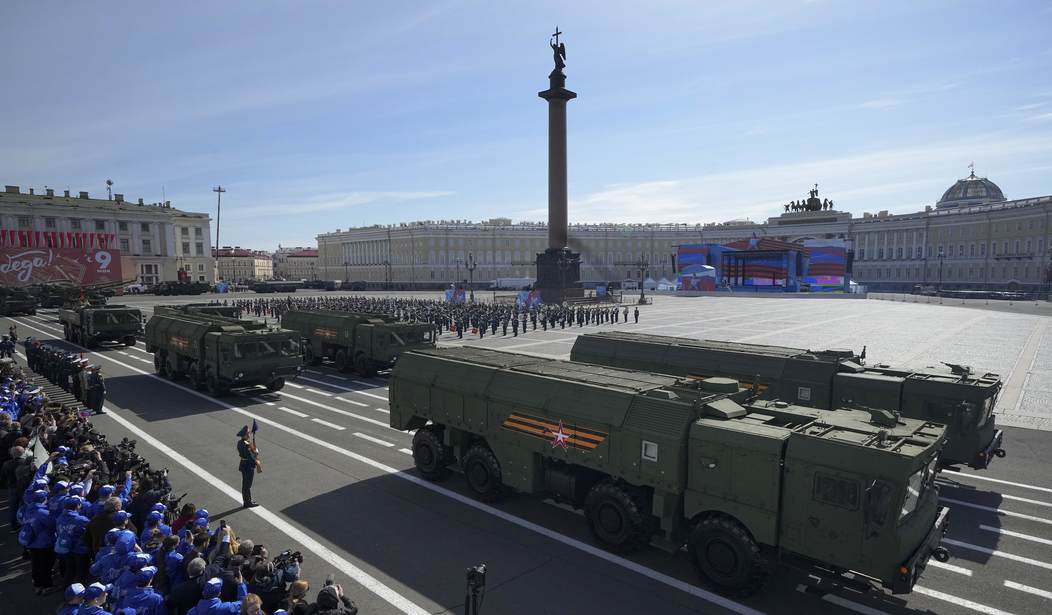
Ukraine launched its new home-grown ballistic missile in combat for the first time yesterday.
For the first time, Ukrainian forces have used a domestically produced Fire point FP-7 ballistic missile in combat.
— OSINTtechnical (@Osinttechnical) October 1, 2026
The FP-7 carries a 200 kg warhead and can hit targets up to 250 km away. pic.twitter.com/itHUWoVm2B
These are meant to replace U.S. ATACMS missiles which the Pentagon has supplied to Ukraine, but with strings attached. Specifically, since spring of 2025 Ukraine has had to request authorization to fire any of the missiles into Russian territory.
The Pentagon has for months been blocking Ukraine’s use of long-range missiles to strike inside Russia, U.S. officials said, limiting Kyiv from employing a powerful weapon in its fight against Moscow’s invasion.
A high-level Defense Department approval procedure, which hasn’t been announced, has prevented Ukraine from firing any U.S.-made long-range Army Tactical Missile Systems, or Atacms, against targets in Russia since late spring, the officials said. On at least one occasion, Ukraine sought to use Atacms against a target on Russian territory but was rejected, two officials said.
The advantage of ballistic missiles, as compared to cruise missiles or drones, is that they fly in a high arc like rockets and then fall to the ground at tremendous speed.
Ballistic missiles are different than cruise missiles. Cruise missiles are self-propelled for the majority of their time in the air, flying in a relatively straight line and at lower altitudes thanks to a rocket propellant. Think of a ballistic missile's flight path as a large arc up and back down again, while that of a cruise missile — fired from a warship, for instance — is closer to a straight line.
Ballistic missiles first came into use during World War II, when the Germans used a ballistic missile called the V-2 to attack London. British air defenses designed to stop aircraft couldn't stop the V-2s, because the rockets traveled too high into the upper atmosphere and moved too fast.
Russia has a significant number of ballistic missiles which fall at roughly Mach 11 or higher (more than 8,000 mph). Ukraine does not have defenses which can effectively stop them with the exception of Patriot-style interceptors that they do not produce.
And that brings us to Putin's plan to break Ukraine's will to fight. His plan is to use those ballistic missiles which Ukraine mostly can't stop and rain them down on the infrastructure the country uses to provide heat in the winter.
Russia has waged similar campaigns each year, with mixed results, but it is approaching this winter armed with stocks of ballistic missiles and jet-powered drones that Ukraine has struggled to intercept.
The scale of Russia’s ambition to freeze Ukrainians into submission is evident in a document that the Ukrainian energy minister, Denys Shmyhal, showed to European partners in Paris two weeks ago, according to two people familiar with his presentation.
Mr. Shmyhal, the people said, described the document as an intercepted Russian plan to cause the energy system to collapse through methodical attacks. The plan, a copy of which The New York Times obtained, describes a campaign of strikes using up to 1,000 missiles, drones and bombs. They would target a wide range of facilities, including electrical substations, hydroelectric and thermal power plants, and boiler houses.
Most alarming, the document says that Russia intends to force Ukraine’s three operating nuclear plants — the backbone of its power infrastructure — to shut down by firing missiles at the electrical switchyards that connect them to the grid. The switchyards sit less than a mile from the reactors.
Russia has been doing this since the start of the war but this year it seems to be saving up its weapons for a big series of attacks that will result in no power or heat when people need it to survive. The average daily temperature in Kyiv during the month of December is around 33 degrees Fahrenheit, and that's the daytime high. During the night it drops into the mid-20s.
Ukraine now has its own ballistic missiles and plans to mass produce them, but production on those is just gearing up and they may not have more than a handful per month for the rest of this year. Even if they have more, Russia has anti-ballistic missile defense, especially around major cities. So for this winter, Russia could be in a much better position than Ukraine.
That said, it's true that Ukraine has managed to take about 30 percent of Russia's gas and oil production offline even without ballistic missiles. And the number of heavy drones has been ramping up all year. So what we could see is a shootout in which both sides are taking out major infrastructure until someone cries uncle.
Editor's Note: Do you enjoy HotAir's conservative reporting that takes on the radical Left and woke media? Support our work so that we can continue to bring you the truth.
Join HotAir VIP and use promo code FIGHT to receive 60% off your membership.









Join the conversation as a VIP Member