In a move that shocks precisely nobody, Iran has done a 180 and denied that the regime has agreed to IAEA inspections any time soon, if ever.
They made the announcement within minutes of Treasury Secretary Scott Bessant announcing that the United States has lifted all sanctions on Iranian oil, which can now be legally traded, in dollars no less, and be sold anywhere within the world without restrictions at market prices.
Under President @realDonaldTrump and @VP, we continue to make the world safer and more prosperous.
— Treasury Secretary Scott Bessent (@SecScottBessent) June 22, 2026
In line with the ongoing productive talks in Switzerland, Iran has committed to free and open transit in the Strait of Hormuz and to permit International Atomic Energy Agency…
Vice President Vance had highlighted Iran's concession to allow IAEA inspectors into the country as a major achievement—something many had already disputed, given that IAEA inspectors had been allowed into Iran up until the 2025 Midnight Hammer operation. Without knowing how freely the inspectors could roam in Iran and whether the disputed sites would be included, it's hard to say whether this was a breakthrough or just a baby step toward getting back to pre-2025 levels of cooperation.
Whether this is a "major milestone" (as Vance says) depends on the details. Iran never totally froze out the IAEA; the agency has been allowed to keep inspecting Bushehr, including earlier this month
— Gregg Carlstrom (@glcarlstrom) June 22, 2026
Will it now be allowed to inspect Natanz, Fordow, etc.? Will inspectors have… https://t.co/JnO1Ogn8Mf
Whether this is a "major milestone" (as Vance says) depends on the details. Iran never totally froze out the IAEA; the agency has been allowed to keep inspecting Bushehr, including earlier this month
Will it now be allowed to inspect Natanz, Fordow, etc.? Will inspectors have regular access or will this be a one-time thing?
How big a breakthrough Iran allowing IAEA inspectors back would be seems to be a moot point, though. Tasnim, the Iranian News Agency, is denying that the concession ever happened, although they conveniently waited half a day to announce that, waiting until the sanctions were lifted.
We lifted oil sanctions and the Iranians reneged on Nuclear inspections. Nobody saw that coming.
— Pino Americano (@PinoAmericano) June 22, 2026
Tasnim even called into question the very idea of ever reaching a deal with the United States, and argued that allowing inspectors in would just give the United States valuable intelligence to use against it by pinpointing where their nuclear facilities are and how best to attack them.
"One of Iran's most important assets today, which prevents some of the 'stupid acts' of the US, is the policy of 'nuclear ambiguity' and the lack of American information about the storage location of the enriched nuclear materials. If the policy of nuclear ambiguity collapses following the entry of agency inspectors into Iran, and the US completes the information it has, this will only serve the enemy, who does not hide its aspiration to remove the nuclear materials from Iran, even through military action"
It seems obvious that Iran is saying one thing behind the scenes and another in front of the cameras. Its claim to have walked away from negotiations yesterday proved half true—its top officials refused to sit down or even meet with Vice President Vance's team, but its lower-level negotiators remained in talks with our lower-level folks.
IRGC-affiliated Tasnim News is pushing back on U.S. Treasury Secretary Bessent's statement that IAEA inspectors have been allowed into Iran, claiming no such permission was confirmed by Iranian negotiators or government officials.
— Open Source Intel (@Osint613) June 22, 2026
Tasnim added that any inspector presence would…
The goal, it seems, is to drag out the negotiations as long as possible to secure concessions, such as lifting sanctions, while simultaneously publicly humiliating the United States. Presumably Iran did concede the point in some way or another that the IAEA would inspect its nuclear facilities behind closed doors, or Vance wouldn't have touted the fact.
But apparently they wanted to lure him into the statement in order to contradict it once the sanctions were lifted.
Tehran Denies Deal to Let Nuclear Inspectors Into Iran
— C14 News Israel • Headlines (@c14israel) June 22, 2026
Iran's Tasnim news agency contradicts reports of a breakthrough, saying inspectors from the International Atomic Energy Agency were never granted access—and preferably never will be.https://t.co/DUU2CRPF4N
Iran has exported 36 million barrels of oil since the signing of the MOU and has another 176 million barrels already at sea on previously sanctioned tankers. That's 200 million barrels that will be sold at market rates and paid with hard currency—so far.
That's about $15 billion flowing into Iran's coffers so far, with another 60 days of selling oil at unsanctioned prices.
The oil markets like how things are going so far, with prices falling to the low 70s and the risk to shipping in the Persian Gulf reduced, making oil transport much cheaper. The risk level is now considered "moderate."
It's not exactly clear whether traffic is flowing freely in the Strait. Iran claims that any ships transiting need permission from their Persian Gulf Strait Authority, and many of the ships transiting appear to be Iranian-affiliated. But some non-Iranian ships seem to be getting through despite failing to comply with Iran's demands. We will have to see what happens over the next several days.
Iran reinstated the Strait of Hormuz transit permit requirement on 21 June. Twelve hours later, commercial traffic was still moving.
— Windward (@WindwardAI) June 22, 2026
Windward's multi-sensor analysis of the northern Strait corridor at 06:34 UTC on 22 June reveals:
→ Four outbound tankers assessed as carrying…
Iran reinstated the Strait of Hormuz transit permit requirement on 21 June. Twelve hours later, commercial traffic was still moving.
Windward's multi-sensor analysis of the northern Strait corridor at 06:34 UTC on 22 June reveals:
→ Four outbound tankers assessed as carrying Iranian crude, three operating dark, one OFAC-designated under the Iran sanctions program.
→ Two inbound LNG carriers, including one transiting with AIS active despite the renewed permit requirement.
→ A cluster of 30+ high-speed craft moving northwest, consistent with IRGCN activity observed since mid-May.
→ A persistent concentration of approximately 25 fishing vessels at the Strait's northwestern entrance.
The next 24–48 hours will be decisive. If neutral commercial traffic continues to transit, the renewed permit requirement has had limited operational impact. If vessels begin holding position or diverting, Iran will have succeeded in triggering a second disruption to commercial shipping.
Stay tuned for updates.
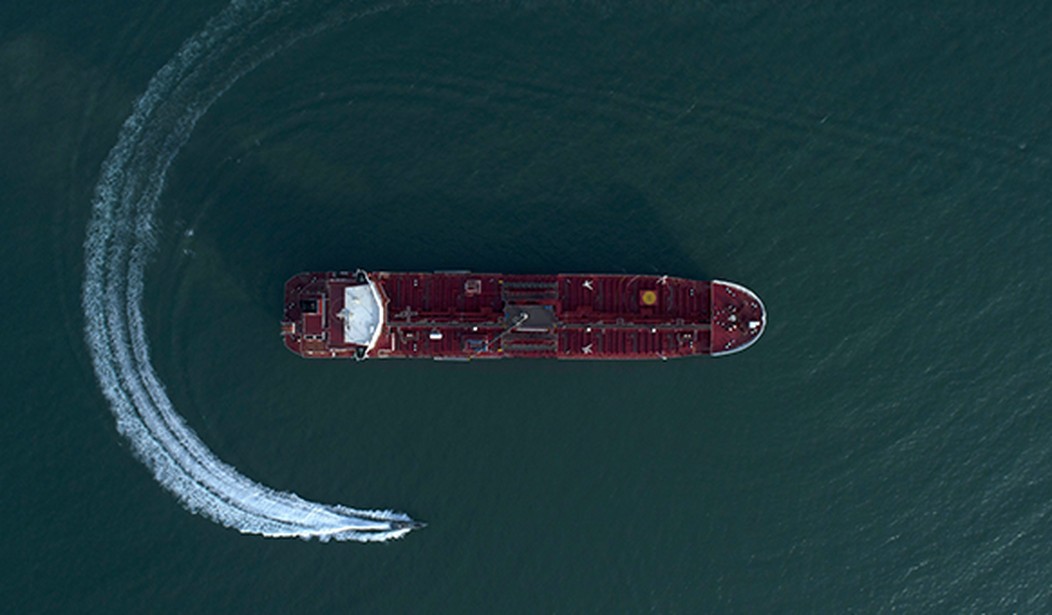
Iran is obviously sending very mixed messages. US negotiators indicate that they are making progress, while Iran is puffing itself up and contradicting US public statements, asserting that it controls the Strait of Hormuz and gets to decide who can pass, and has IRGC "Mosquito Navy" boats patrolling the waters.
Traffic visible via https://t.co/bYX0jXrfTw in the Strait of Hormuz shows at least 2 dozen vessels have transited over the last 24 hours, with all but one vessel visible using the Iranian traffic separation scheme. It is highly likely more transits occurred than are shown with… pic.twitter.com/qrXTF8xhn8
— OSINTdefender (@sentdefender) June 22, 2026
Traffic visible via http://MarineTraffic.com in the Strait of Hormuz shows at least 2 dozen vessels have transited over the last 24 hours, with all but one vessel visible using the Iranian traffic separation scheme. It is highly likely more transits occurred than are shown with vessels turning off their automatic identification system transponder for the transit.
It's unsurprising that confidence is shaky, but at least oil is slowly returning to the market.
Obviously, it's not encouraging that Iran is now floating the possibility of there being no final deal at all. I have been predicting no deal, of course, but even I expected them to downplay the possibility for a bit longer than this. On the upside, they are still at the negotiating table, and making maximalist demands is standard operating procedure in high-stakes negotiations.
One lesson is clear: take nothing anybody says at face value, because the story can change in an instant.
Editor's Note: Do you enjoy HotAir's conservative reporting that takes on the radical left and woke media? Support our work so that we can continue to bring you the truth.
Join HotAir VIP and use promo code FIGHT to receive 60% off your membership.










Join the conversation as a VIP Member