This belated and begrudgingly undertaken decision appears to be all Trump's fault on its face, and why not?
Trump and his Secretary of the Interior Doug Burgum have bedeviled the wind industry - as promised - from the very moment they took office. Even with the ongoing legal jousting and occasional losses in the courts, they still tilt at the large wind projects, be they under development, in planning stages, or even proposed lease sales dangling in states' Green dreams - they are all targets.
The latest blow was Burgum's pause on the five wind farms under construction off the East Coast at the end of this past December.
Judges have since stepped in and ordered work on two of the farms restarted (yet again): Revolution Wind off the Rhode Island coast and the massive Sunrise Wind off the New York State coast.
A federal judge on Monday struck down the Interior Department’s order to halt work on a multibillion-dollar wind farm off the coast of New York State, the fifth time the courts have ruled against the Trump administration’s efforts to throttle the country’s offshore wind industry. The administration is now 0-5 in its effort to stop wind farms under construction along the East Coast.
Judge Royce Lamberth of the U.S. District Court for the District of Columbia issued a preliminary injunction that would allow the developer of the New York project, known as Sunrise Wind, to restart construction while the broader legal battle unfolds.
In December, the Interior Department ordered all work to halt on Sunrise Wind and four other wind farms off the East Coast. To justify the sweeping move, officials cited a classified report by the Defense Department that they said found the projects to be a national security threat.
But Judge Lamberth, who was nominated to the bench by President Ronald Reagan, said he was unpersuaded by the government’s claims about national security after reviewing the classified report under seal. He said the actions of the Interior Department’s Bureau of Ocean Energy Management had caused “irreparable harm” to the developer of Sunrise Wind.
It's all apparently gotten to be a bit much for the nerves of those at the agency that handles such business for the state of New York, the New York State Energy Research and Development Authority (NYSERDA).
They've had enough until things chill out some, and are pulling the plug on allowing any further developments.
The Trump administration's posture is simply causing too many 'disruptions.' That's the official line.
New York State on Friday cited "federal disruptions" and "market uncertainty" in canceling its latest and largest request for new offshore wind energy, months after several bidders had already pulled out of the process.
Nixing the solicitation puts an end, for now, to a plan that foresaw potentially thousands of new wind-power arrays in deep waters off New York and New Jersey.
...NYSERDA in its statement said "federal actions disrupted the market and instilled significant uncertainty into offshore wind project development."
That's the face-saving public statement.
The fact of the matter is, as you well know if you've been kind enough to bear with me over the past couple of years, that the wind industry is in a good bit of trouble itself for any number of factors. Trump just makes a good excuse to walk away.
There have been ongoing quality issues that have nearly bankrupted companies. The nightmare blade delamination off Nantucket two summers ago changed quite a few formerly pro-wind minds after dealing with both the blade debris and the company's opaque and inept response to the incident. Rising interest rates have caused significant upheaval in the material prices for developments, and there has been a noticeable lack of enthusiasm for formerly willing utility boards to continue hiking consumer rates paid to developers in contract reworks to cover developer cost overruns. Likewise, opposition to wind farms and offshore projects, particularly, has gotten better organized and is reaching across segments of society that don't normally interact to form powerful obstacles at every stage of a proposal, from that first handwritten sign at a protest all the way to class action lawsuits.
Government subsidies have gone the way of the dinosaur.
New York State's ambitious goal to have some 9000 MW of wind operating by 2035 took a serious knock in 2024 when GE Vernova, of the infamous Nantucket blade failure, pulled the rug out from under three planned wind farms when it canceled plans to make what would have been the largest turbines (18MW) then available. That announcement had also scuttled the turbine dreams of verminous New Jersey governor Phil Murphy. The one company left that could build turbines that large, Siemens Gamesa, almost doubled its prices. Supply and demand's a bear, no?
No doubt this ongoing industry turmoil has been playing into NY's looking for a graceful exit, and Trump is that guy who gives them one.
But I'd bet there's even more to it.
People aren't falling for the renewables-in-the-tailpipe anymore. They're simply no longer willing to be gullible - they can't afford it. And especially worrying to Mid-Atlantic and New England governors, their core voting demographic is feeling 'misled.'
WOULD I LIE TO YOU?
...According to new polling from Independent Women, 82% of New England women say they’re paying more for their electricity bills, compared with five years ago. This is the first comprehensive poll exclusively asking women—who primarily handle their household electricity bills—their attitudes on energy issues.
New England has enacted the nation’s most aggressive climate policies to phase out oil, gas, and coal and achieve a 100% renewable energy target by 2050. While it’s easy to blame utility companies and the federal government for exacerbating the electricity crisis, state policies—namely, New England’s decarbonization plans—bear more responsibility for inviting energy insecurity and associated higher costs.
These women are about this close to connecting touchy-feely fuzzy green lies and their ruinous electric costs, no matter what cultish argle-bargle Maura Healey or Kathy Hochul spew.
... Last fall, the CEO of ISO New England, the regional transmission organization overseeing the region’s electric grid and transmission, warned that wind and solar aren’t dependable sources during winter, remarking: “We cannot operate the system in the wintertime without a dependable energy source that can balance the system when the sun doesn't shine and the wind doesn't blow.”
By continuing down its decarbonization path, New England, save for New Hampshire, would see energy costs spike $815 billion through 2050 over the cost of operating the current grid. But there’s a solution to the region’s self-inflicted energy crisis. A new report by Always On Energy Research and a coalition of Northeastern think tanks, “Alternatives to New England’s Energy Affordability Crisis,” argues that building natural gas and nuclear power, rather than costly, unreliable offshore wind and solar projects, will save New Englanders upwards of $700 billion in energy costs.
For instance, Maura Healey recently touted that Massachusetts would never need natural gas lines because they'd signed an agreement with Quebec Hydro Power (you'll always have electricity from water, right?) to pick up when renewables drop the load.
Here came Winter Storm Fern. What's the first thing Quebec Hydro did to New England?
They cut the power off because they didn't have enough of their own.
How cold is it tonight? Quebec ("the battery of North America") has temporarily shut off exports on its brand-new transmission line to New England (NECEC) and is currently importing nearly 1,000 MW from NYS. pic.twitter.com/MPSlPztYVg
— Ken Girardin (@PolicyEngineer) January 25, 2026
Winter Storm Fern showed Net Zero to be naked as a green jaybird, and a frozen one at that.
"Winter Storm Fern exposed net zero’s failures." "After decades of deployment, lavish federal subsidies, a complicit media with relentless headlines trumpeting the energy transition, and the end of fossil fuels, wind and solar accounted for only 9% of the generating portfolio."…
— Byron York (@ByronYork) February 11, 2026
The New York Independent System Operator (NYISO) also anticipates Fern's electric tab will be the highest ever for the month of January.
The average cost for electricity in NYISO was $201.89/MWh in January, up nearly 53% from January 2025 and possibly the highest ever for the month, the ISO reported.
...Without native supplies of natural gas, the Eastern seaboard relies on a pipeline network that is historically constricted during extended bouts of frigid weather, said Pieter Mul, a grid expert and associate partner at PA Consulting's energy and utilities practice.
...PJM's outages are higher than the grid planned, Mul said, adding that there is less flexibility in the PJM system than a few years ago because of power plant retirements and a surge in demand from data centers.
PJM's territory also is hurt by bottlenecks in its transmission system of high-voltage power lines, hindering the transfer from west to east. For example, cheap power in Illinois on Sunday - sometimes dipping into negative prices because of abundant wind energy - could not be moved to help out other sections of PJM.
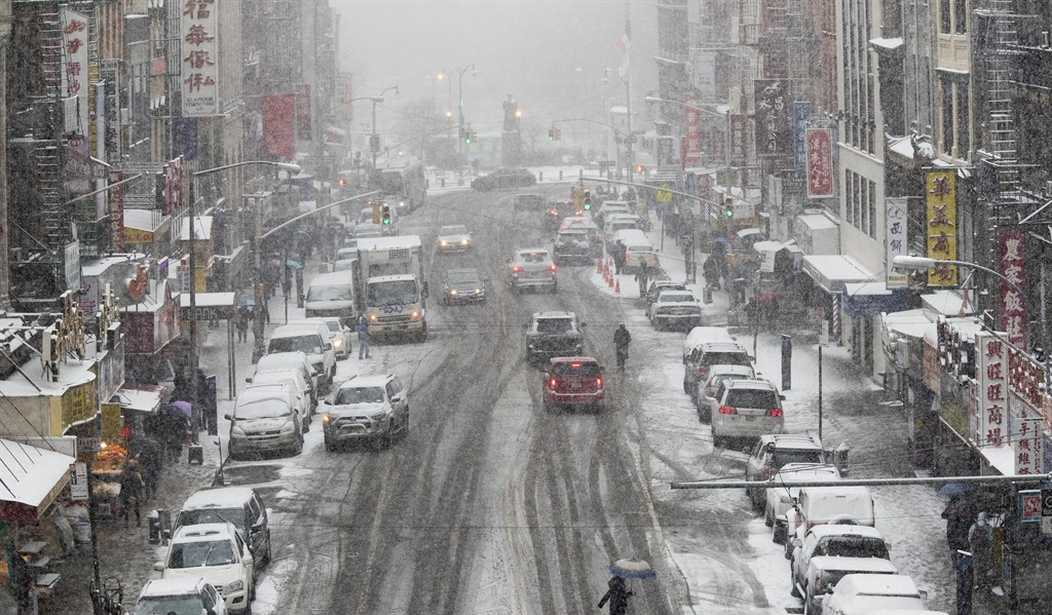
As snow and sleet hit the major cities of Boston, New York, Philadelphia and Washington, DC, the power grid also lost access to solar power in the afternoon from an increase in cloud cover.
Meanwhile, power prices in PJM and the electric grids for New York and New England surged between $400 and $700 per MWh Sunday afternoon, grid operators reported. The increases reflected demand that continues to top grid operator forecasts.
ISO New England, which serves a six-state region that includes Boston and Hartford, reported about 20.2 gigawatts of demand at 1:45 p.m. EDT, or greater than a projected peak load of 19.5 GW expected later in the day.
With constricted natural gas access, nearly 40% of the New England grid's output came from oil-fired power plants. Natural gas, usually the grid's main source of fuel, accounted for just 30% of the grid's fuel source for power plants.
But as Mul noted, New England supply of diesel fuel oil can be depleted and not easily resupplied during hazardous winter conditions. ISO New England's surplus capacity dropped to about 1.1 GW, down from earlier estimates of several gigawatts.
Earlier on Sunday, ISO New England issued an "abnormal conditions" alert asking power plant operators not to schedule any maintenance or anything else that would affect the grid's reliability.
Keep retiring those power plants prematurely, and strangling attempts to bring pipelines in.
Reliable power sources supplied Americans with the energy they needed in the midst of winter storm Fern.
— Secretary Chris Wright (@SecretaryWright) February 9, 2026
And in New England, refuse and wood provided more energy than wind and solar! pic.twitter.com/59Wr3LRF7C
Burning garbage produced more energy than wind and solar did.
It's really no wonder that NYSERDA decided they'd back gracefully away from the offshore farms...for now.
ORANGE MAN BAD
And all that.
At least wait until it warms up, and pissed-off folks have had a chance to cool down about those electric bills over the winter, but before the A/C has to kick in.
Editor's note: If we thought our job in pushing back against the Academia/media/Democrat censorship complex was over with the election, think again. This is going to be a long fight. If you want to join the conversation in the comments -- and support independent platforms -- why not join our VIP Membership program? Choose VIP to support Hot Air and access our premium content, VIP Gold to extend your access to all Townhall Media platforms and participate in this show, or VIP Platinum to get access to even more content and discounts on merchandise. Use the promo code FIGHT to join or to upgrade your existing membership level today, and get 60% off!












Join the conversation as a VIP Member