


In 2016, as some of us with reservations about Donald Trump watched his against-all-odds rise from long-shot to the White House, and in my case (among many others) not expecting much, I pinned my hopes on Trump possibly, maybe, appointing some solid conservative Supreme Court justices who would bring some originalist rulings to our nation's body of law — especially on Second Amendment issues. As a general rule, I dislike litmus tests — but for me the Second Amendment is a bellwether for a candidate's, judge's, politician's or person's respect for all the other civil liberties.
Trump delivered much more than that in his first term, and so far in his second. And his Supreme Court has delivered more progress on upholding that vital civil liberty than any other court in history.
And next month, with a little luck and a solid decision, many of the intrusive gun bans that have sprung up in blue states in recent years should get circular-filed.
But you've gotta be ready for some suspense.
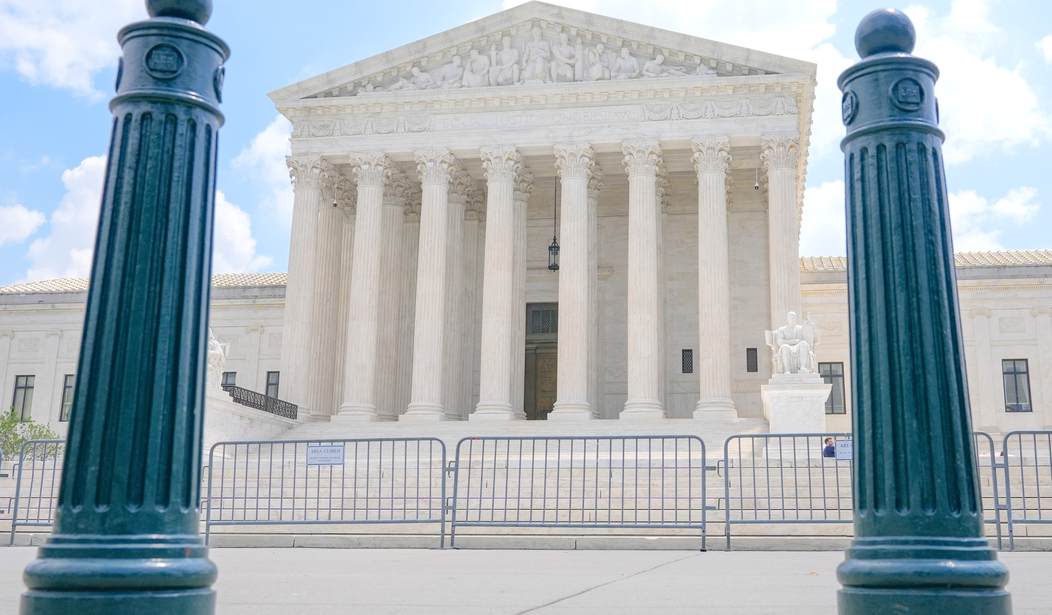
Dec 2: the Supreme Court hears the AR-15 ban cases, Viramontes v. Cook County and Grant v. Higgins. We filed a brief defending America's most popular rifle. A ruling likely comes after our session ends, so we fight at the Capitol either way. https://t.co/P8oTjDWIs0 #mnleg https://t.co/32bquWzPRy
— MN Gun Owners Caucus (@mnguncaucus) November 15, 2026
The case goes to the high court on December 2 for an hour of arguments over the consolidated cases of Viramontes vs. Cook County and Grant vs. Higgins:
The Supreme Court will hear a pair of challenges to the constitutionality of bans on AR-15s and other semiautomatic rifles on Dec. 2. The oral arguments in Viramontes v. Cook County, which has been consolidated with Grant v. Higgins, headline the December argument calendar, which was released on Friday afternoon. Other highlights of the December argument session include cases involving the rights of parents to bring a lawsuit challenging a state law on care for runaway teens and Arizona election laws...Cutberto Viramontes filed the challenge to the ban on semiautomatic rifles in Cook County, Illinois, while gun owners and gun-rights groups challenged a similar law that Connecticut passed in the wake of the 2012 mass shooting at Sandy Hook Elementary in Newtown, Connecticut. In both cases, the lower courts upheld the bans against arguments that they violated the Second Amendment right to bear arms, prompting the challengers to come to the Supreme Court in 2025. After repeatedly considering the cases at their private conferences, the justices finally agreed on June 30 to weigh in.
If all goes well — and one must not presume too much before the argument is made — the decision could put an important piece into the puzzle that is the legal framework upholding not only the theoretical but the practical right to keep and bear arms to defend one's life, property, community, family and freedom. It's a legal story that goes back over 20 years:
Up until recently, we have not had much guidance on what the “plain text” analysis at step one of Bruen’s history and tradition framework was supposed to look like. In Wolford, Alito clarified that this inquiry consists of three questions: (1) “does the law apply to ‘the people’—which is to say, ‘all members of the political community’?”; (2) “does it concern any form of “Arms,” which he defined as “any weapon customarily used for offensive or defensive purposes’?”; and (3) “does the law place any restrictions” on the keeping or bearing of arms?
The combination of Heller v. District of Columbia settled the first question (and McDonald v. Chicago incorporated it to the states via the 14th Amendment); Bruen v. the New York State Rifle and Pistol Association, the second (affirming the right pertained to "commonly owned" firearms).
And in December, the argument will turn to the question "what restrictions can the states apply to that individual right:
The final question that a court must answer is whether the analogues are “‘relevantly similar’ to the modern law.” That is, a court needs to assess “how” and “why” the historical analogue restricted the Second Amendment right and ensure that these two reference points are “sufficiently similar.”
"Assault weapons" restrictions in Illinois, Virginia and Colorado among others, as well as incipient laws in several other "blue" states (including one I'm closely involved in) are all highly intertwined with this decision, which should be announced at the end of the term in June.
With a little luck and an A-game performance from petitioners' counsel, it should go well.
But this is a good time to remind you all that if Second Amendment supporters won more legislative elections, we wouldn't have to cross our fingers and hope the courts don't punt on some abstruse technicality.