







It feels like it's not very often that the NY Times says something positive about an operation taking place under the direction of President Trump. But today they did just that with a story that notes an ongoing operation to help ships full of oil clear the Strait of Hormuz which is working, though obviously the total number of ships is still down compared to the situation prior to the war.
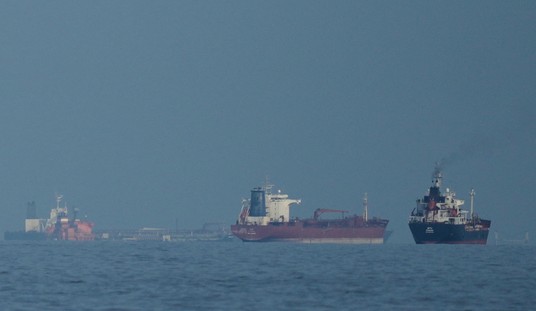
Only a few oil tankers braved Iran’s attacks to go through the Strait of Hormuz for much of the war, leading to a drastic reduction in how much crude reached world markets.
But since May, the U.S. military has played a crucial role in getting millions of barrels of oil through the strait, helping to keep oil prices from rising further.
The operation stealthily shepherds tankers through the southern part of the strait on routes close to Oman...
Before the war, about 15 million barrels of crude oil a day went through the Strait of Hormuz. In July, tankers using U.S. protected routes transported around five million barrels of oil daily out of the Persian Gulf, according to analysts.
“It’s one of the surprising successes,” said Michelle Wiese Bockmann, a shipping analyst at Windward, a maritime analysis firm. “They have been extraordinarily effective in keeping that southern corridor operating, despite the attacks.”
There is of course a downside, which is that the efforts to protect shipping are expensive and are forcing ships and sailors to remain in the region much longer than expected.
To try to protect vessels on the southern corridor, Central Command uses a range of weapons that can intercept Iranian drones and missiles. Ship operators say they register any planned trips through the strait with the U.S. military, and then report possible threats or attacks as they occur. The United States uses ships, helicopters and planes to launch weapons to intercept attacks. It has helped over 1,000 ships transit the strait, according to Central Command.
Iran hasn't given up on stopping this traffic and routinely fires missiles at ships transiting close to Oman. At least 15 ships have been hit despite the U.S. Navy's protection and three crew members have been killed and several more injured in the attacks. Because of the inherent risk, not all of the shipping companies are willing to risk it, even with U.S. protection.
The upside is that while gas is still up about a dollar per gallon compared to a year ago, it hasn't spiked to the levels seen earlier this year. Here in California, the state average is about $5.50 which is high but not as high as the $6 we were seeing a few months ago. And the amount of oil making it through is going up.
Ms. Wiese Bockmann, the shipping analyst, said the amount of oil going through had been rising since May, when the tanker protection initiative began. Roughly four million barrels a day exited in June, rising to some five million a day in July, she said.
But there probably is a limit to how long we can keep all of these ships in place.
The Lincoln, for one, has been at sea since Nov. 21 without a port call that would allow the crew to rest, and will need a significant amount of maintenance before it can deploy again. The Japan-based carrier George Washington is coming to relieve the Lincoln, but a relief for the Norfolk-based Bush — which deployed on March 31 — has not been publicly identified.
As always, Iran's game is just to wait it out. If the regime survives they'll call that a victory no matter what shape the country is in.
Editor's Note: Do you enjoy HotAir's conservative reporting that takes on the radical Left and woke media? Support our work so that we can continue to bring you the truth.
Join HotAir VIP and use promo code FIGHT to receive 60% off your membership.


Join the Conversation
VIP members get the ability to comment on articles.