Black Lives Matter seems like a topic ripe for examination by social scientists, but this study I came across today is not what I was expecting. The idea was to examine how BLM impacted cooperation among races in the workplace. Again, seems like a reasonable question to ask. What's odd is the particular workplace the researchers used to measure cooperation. It wasn't some Fortune 500 company full of people working in cubicles. They chose the NBA as their example and their proxy for cooperation was how many passes people made on the court within and between races. No, I'm not kidding.
The study, recently published in Academy of Management Journal, examines how major societal events tied to race and injustice can shape workplace behavior. Researchers specifically investigated how the heightened salience of the Black Lives Matter (BLM) movement impacted cooperation between Black and white coworkers...
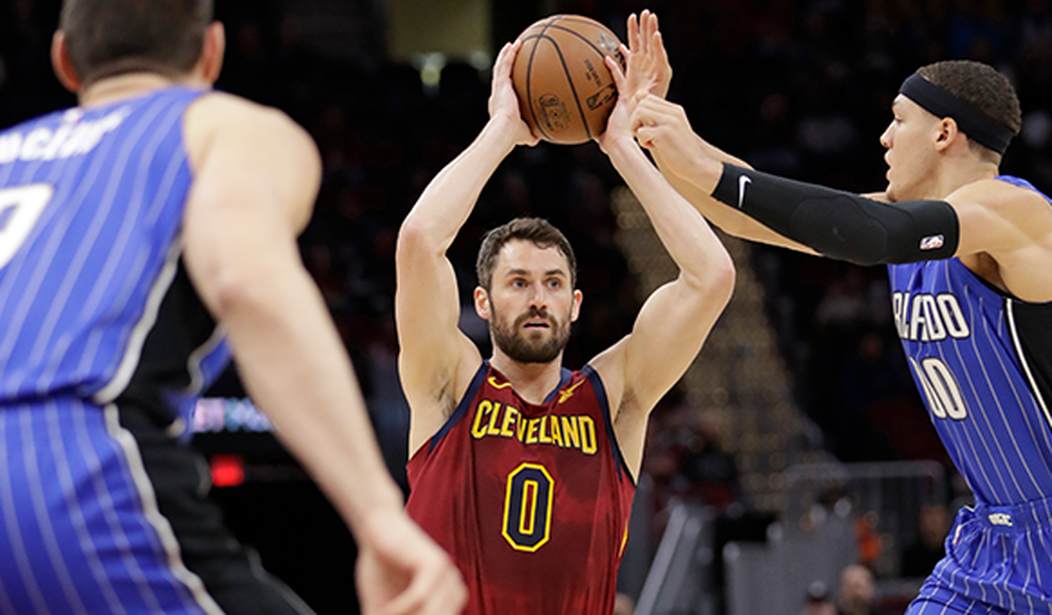
To investigate these dynamics, researchers used an unexpected but enlightening proxy: the National Basketball Association (NBA).
“The NBA is essentially a collection of mini-organizations,” Gupta said. “Players from different racial backgrounds must cooperate intensively in order to succeed, and importantly, their cooperation can actually be measured.”
Using detailed data from more than 124,000 player-to-player interactions during the 2014 to 2015 NBA season, the researchers tracked how passing rates aligned with the rise of the BLM movement. Passing behavior offered a direct behavioral measure of workplace cooperation.
This strikes me as really odd. BLM was just getting started in 2014-2015 and wouldn't really take over corporate thinking until the summer of 2020. I guess you could argue that the NBA is a place that would be especially attuned to what BLM was doing in 2014 when the shooting of Michael Brown became national news and there were riots in Ferguson, Missouri.
But passing behavior on the court seems like a pretty unique proxy for cooperation between races. Still, the researchers claim the results showed a clear change in behavior.
The findings revealed strikingly different responses among Black and white players. Black players increased cooperation with other Black players — marked by more passes — but did not reduce cooperation with white teammates. The passing behavior of white players showed standard cooperation with other white players, but white players became less likely to cooperate with Black teammates.
I don't have access to the data but it's not clear to me how black players can increase the number of passes to other black players and maintain the same level with white players. There is a limited number of passes in a game. Presumably directing more passes to one group would mean directing fewer to another group.
But let's assume the number isn't fixed and that the number of passes to black players did go up while the number to white players was unchanged. That still means the percentage of passes to each group has changed.
If black players were making 10 passes per game to other black players and the same number to white players pre-BLM and then afterwards were making 12 passes to black players and 10 to white players, the tally of passes to white players is the same, but the percentage is not. It used to be 50% of passes went to white players and now it's 45%. Again, I haven't seen the figures in the study so I'm not sure how they came up with this.
The researchers also ran two experiments of their own.
The researchers then conducted two experiments in which participants were randomly exposed to either materials describing highly publicized incidents of race-based injustice or unrelated information. Participants were then asked to decide about collaborating with other Black and participants, showing how heightened awareness of these events shapes cooperation.
For Black participants, attention to BLM increased identification with their racial group and strengthened feelings of solidarity with other Black individuals. This increased their willingness to cooperate with fellow Black coworkers.
White participants, however, experienced a different psychological reaction. Researchers found that many white participants experienced a sense of "moral taint" associated with acts of racial injustice committed by members of their racial group. This shame increased concern that attempts at interracial cooperation might be rejected, misunderstood or viewed skeptically by Black coworkers. As a result, many white participants became more hesitant to initiate cooperation across racial lines.
"They did not necessarily become hostile," Gupta said. "Rather, many seemed to retreat inward because they feared that their gestures might be unwelcome or misinterpreted."
And this is where I'm stymied because that makes a certain amount of sense. You would expect white people to become guarded in an environment where everyone agrees white supremacy is the chief problem society is facing and simultaneously being told that everyone is guilty of systemic racism. How could that not lead people to pull back and walk on eggshells?
So as goofy as this study is, to the point that I wondered if it was part of a hoax of some kind, the bottom line does make a certain amount of sense. And the bottom line here is that BLM sends everyone to their racial identity corners. Whether it's black people cooperating more with their own race (and less as a percentage with other races) or white people afraid to cooperate for fear of being rejected, the outcome of BLM seems mostly bad, especially if your ultimate goal is a society where everyone gets treated the same regardless of race.