






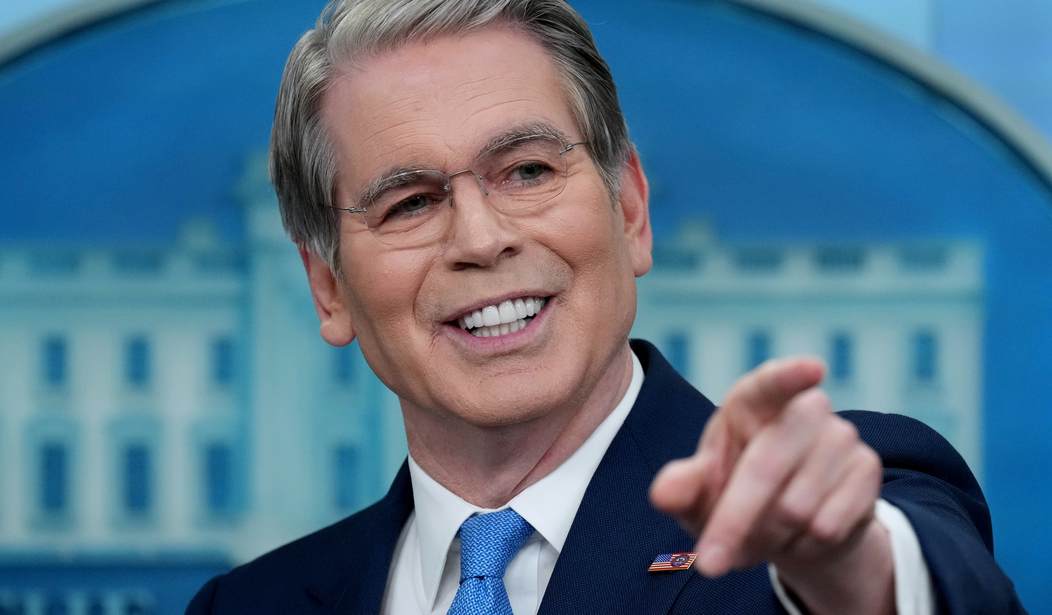
The next major action in the war with Iran will not come from sorties over Tehran, an invasion of Kharg Island, or targeted hits on IRGC leadership. The US will launch its "economic D-Day" today to force the IRGC into capitulation from a podium. Treasury Secretary Scott Bessent will announce punitive sanctions on all countries still doing business with Iran at a press conference at 1 pm ET, essentially completing the economic blockade the US Navy has imposed since mid-April.
What will Bessent unveil today that will intensify an extant and comprehensive sanctions regime on the IRGC? Quite simply, Treasury will target the financial institutions that allow for black- and gray-market trade with the Iranian regime:
Bessent has not-so-subtly alluded to possible secondary sanctions—or sanctions on countries that do business with Iran. In an op-ed in the Financial Times yesterday, he wrote that “any nation that serves as a financial artery of a withering regime should expect to share in its isolation.”
That means Bessent could be putting a spotlight on countries like China, which buys about 90% of Iran’s oil exports. It’s interesting timing: Chinese leader Xi Jinping is expected to visit the White House next month.
The U.S. has already taken steps to target the privately run Chinese refiners, known as “teapots,” that soak up nearly every barrel of oil Iran exports. Sanctions on Chinese banks could be one possible next step, said Ben Emons, managing director at Highline Asset Management in a note today.
“The most extreme step would be a full global secondary‑sanctions regime that cuts off any foreign bank, company, or ship that deals with Iran from the U.S. financial system and ports, effectively isolating Iran from global trade—the true ‘maximum pressure’ scenario U.S. officials are hinting at,” he said.
Expect the Chinese banks to get targeted down the line. Bessent and Donald Trump probably hope that Xi Jinping will get the message and back away from trade with Iran to keep the US markets open. This offensive is likely aimed at Turkey and the UAE first, especially the latter, whose oil exports are now dependent on the US Navy and whose leverage has greatly decreased. Turkey is getting more belligerent toward the US and Israel and chummier with the IRGC of late, and Bessent and Trump want Recep Erdogan to understand that those choices have steep costs.
Emons warns that the sanctions might roil the oil markets. However, a funny thing has happened on the way to the Bärreldämmerung ... oil prices are actually dropping in anticipation of Bennett's announcement of the First Spreadsheet Division Offensive. The dollar is looking a bit stronger, too:
A retreat in oil prices is offering relief to bond yields as investors await details on Washington’s stepped-up economic pressure campaign against Iran.
Treasury Secretary Scott Bessent is expected to outline plans to inflict an “economic D-Day” on Iran at a press conference at 1 p.m. ET. Brent crude futures are on pace to break six straight sessions of gains, and the dollar has paused its recent slide.
Why would oil drop at the moment when hostilities in the Hormuz crisis are escalating? According to some reports, the Hormuz crisis may be mainly resolved:
Iran appears to be losing its grip on the Strait of Hormuz while traffic through the critical waterway has exploded by nearly 400% over the last two weeks — as ships increasingly use a US-backed corridor to cross.
Nearly 200 ships navigated the strait last week, up from 150 the previous week and just 40 two weeks earlier, according to data from the UK Maritime Trade Operations Center.
The surge brings total traffic along the passage route to about 20% of pre-war levels, through which roughly 20% of the world’s seaborne oil flowed in peacetime.
The WSJ casts a skeptical eye on these claims, but acknowledges that covert operations are difficult to track:
Energy Secretary Chris Wright said last week the U.S. military had helped ship over 15 million barrels of crude and oil products out of the waterway last Tuesday. He put the average oil exports through the strait over a seven-day period at more than 8 million barrels a day. Earlier this month, Wright said the seven-day average stood at around 9 million barrels a day.
The count from commercial ship trackers tells a different story, with estimates ranging from roughly 2 million to 6 million barrels a day. Industry figures on the amount of crude oil and oil products being loaded onto ships in the Persian Gulf and delivered to buyers don’t corroborate the U.S. claims.
There are lots of reasons the numbers can diverge. Many ships are crossing the strait at night with their transponders off, making them hard to track by radio signal or satellite imagery. Big tankers can carry 2 million barrels apiece, so missing one or two can make all the difference. Measurement periods also make a big difference, as do assumptions about how full ships are when they cross.
Wright has said private data firms are undercounting ships that move covertly through the waterway. Still, a persistent gap remains between Washington’s estimates and what the market can independently verify.
Perhaps. However, the fact that prices are sliding down suggests that market participants are seeing more oil entering the market and are adjusting their sales prices to reflect higher inventory. That's how markets work, after all, a point one might expect the Wall Street Journal to consider.
At any rate, we seem to be doing pretty well with the blockade at the moment. Bessent's new plan will close that circle and leave the IRGC without income and without any effective way to import necessary goods to maintain even a basic standard of living for its captive population. This has already prompted a public split between the civilian and military wings of the extremist regime in Tehran, and it may not take all that much patience to watch those fissures turn into foundational fractures. However long it takes, though, the US should stick to this plan rather than get distracted by interlocutors from Turkey, Qatar, Pakistan, and others who have a vested interest in letting a weakened IRGC off the hook.
Editor's Note: Do you enjoy HotAir's conservative reporting exposing the radical left and woke media? Support our work so we can keep bringing you the truth.
Join HotAir VIP and use promo code FIGHT to receive 60% off your membership.



Join the Conversation
VIP members get the ability to comment on articles.