
Rarely have we seen polling collapses like we did Tuesday night in Wisconsin. Only it hasn't even been all that rare, even this month. The week before, pollsters in Michigan also missed the final outcome by double digits. It's as if pollsters had made up numbers that coincided with everything but reality.
So what actually happened? Axios attempts to pass along a series of excuses in a "here's why" piece, but it reads more like a litany of blame-shifting for an industry that has consistently failed to predict outcomes. Or even come close, for that matter:
- But on Wednesday, the reasons for the miss seemed clear: Surveys a week before the primary captured only a hint of a rapidly changing roller coaster of a race in which Crowley was gaining fast, and Hong was playing defense.
Driving the news: Two polls had shown Hong up by about 20 points over Crowley. But Crowley wound up winning by half a percentage point in an upset that interrupted a run of primary wins by left-wing Democrats this spring.
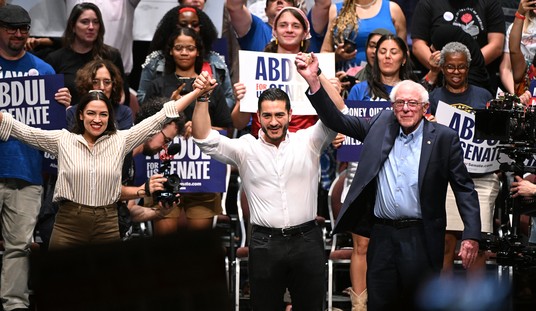
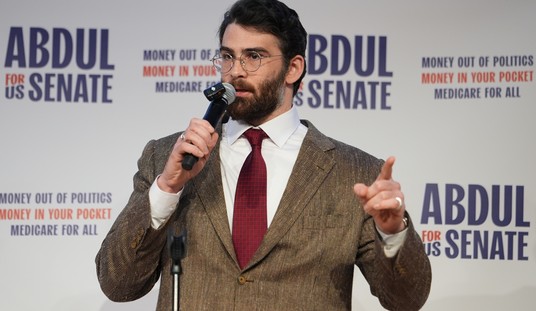
- Just a week earlier, polls also had overestimated progressive Abdul El-Sayed's strength in the Michigan Senate race by double digits. He won by 1 point.
Polls help shape the pre-election narrative for campaigns, but the Midwest misses were reminders of the surveys' limitations in capturing voters' feelings over just a few days in a long race.
Might the chaos explain the missed result in Wisconsin? Maybe. The final weeks of that campaign resembled a clown car of Democrat establishment candidate entries and exits. David Crowley had never polled well in the race even before he pulled out, but outgoing governor Tony Evers almost literally dragged Crowley around the state in a desperate bid to derail Francesca Hong after the party re-floated Crowley in July.
Was that a challenging environment for pollsters? Yes, indeed. That still doesn't really explain the big miss in Wisconsin. Only one poll had Crowley within 20 points of Hong in the last month, a PPP poll the week before the primary that was also the only survey that had Crowley over 20%. Marquette had Crowley at 7% two weeks before the primary, after he'd re-entered the race, and Marquette is supposed to be the gold standard in Wisconsin polling.
Let's say for the sake of argument that Wisconsin's political chaos made the Democrats' gubernatorial primary impossible to poll accurately. What's the excuse for Michigan? That race had been stable for months. The only change that would have affected the polling was Mallory McMorrow's exit under pressure from the party, which wanted a binary race to stop Abdul El-Sayed. That happened on July 6, although McMorrow withdrew too late to take her name off the ballot, which may have kneecapped Haley Stevens in the end.
Five pollsters went into the field after McMorrow's withdrawal to survey that now-binary race, producing five surveys asking about support for the two candidates who had been in the race for months. All five of them found El-Sayed leading by double digits; four of the five put his support at 52% or higher. Only the first two polls showed Stevens getting into the forties for support; the final three had Stevens at 36%, 39%, and 38%.
El-Sayed ended up winning by one point, 48.5/47.5.
Pollsters are excusing this flop by claiming that the open-primary systems in both states make it difficult to poll. First off, that's nonsense. Pollsters routinely ask qualifying questions for open primary states, asking respondents to identify the primary in which they plan to cast a ballot. We have decades of polling data in such states without the shocking failures we saw in two successive primaries in a single month.
Nor does this answer the scale of both misses, although it does raise an interesting point, as I mentioned in the Final Word last night:
Haven’t written this (yet), but polling orgs frequently rely on models that underestimate the size, intensity and preference of Black voters. Screw up Detroit and you’ll miss what’s happening in Michigan; underestimate Milwaukee and your Wisconsin numbers will be off. https://t.co/WjsRuYOqYF
— Errol Louis (@errollouis.bsky.social) (@errollouis) August 12, 2026
That may matter marginally, but it also doesn't answer why it happened this year in two successive primaries. The sheer scale of the failure in Wisconsin, and especially Michigan, outstrips this issue. It also suggests that pollsters have suddenly lost the thread on the most politically significant demo in Democrat primaries, which would be an indictment in and of itself. How did multiple pollsters suddenly develop amnesia about black voters in two primaries where their votes would especially matter?
The simpler explanations likely suffice. The polling industry has been failing for years as a predictive model, while simultaneously becoming more valuable as a narrative-shaping device for the Protection Racket Media. Until this month, the industry has explained its failures away by hiding within margin-of-error arguments, but these double-digit flops leave them nowhere to hide. It looks very much as though pollsters wanted to provide evidence of inevitability for socialist candidates like Hong and El-Sayed, and that they will continue to obfuscate reality in the general election to push that perception all the way to November.
That's why I'm not buying the polling in Texas, either, as long as it suggests that James Talarico is the kind of Democrat who can win a statewide contest for the first time in 32 years. Don't follow the polls; follow the money, as Jasmine Crockett advised last week. The polls are completely unreliable these days, and the pollsters are offering only excuses rather than reforms that would improve their reliability.
Asked Jasmine Crockett last night in St. Louis if she thinks James Talarico can turn Texas blue this fall.
— Sahil Kapur (@sahilkapur) August 5, 2026
“I don't know,” she said.
She doesn’t buy the polls, saying they’ve historically overstated Democrats’ prospects in Texas. “I watch money.”
“When I look at the money, if… pic.twitter.com/rJLZOuKhlC
Editor’s Note: The 2026 Midterms will determine the fate of President Trump’s America First agenda. Republicans must maintain control of both chambers of Congress.
Help HotAir continue to report on the Democrats’ radicalism and inform voters as our nation faces a crossroads. Join HotAir VIP and use promo code FIGHT to receive 60% off your membership.








Join the conversation as a VIP Member