We all know about the Democratic National Committee's woes these days. The larger problem may have run under the radar, at least in part.
To a certain extent, Ken Martin's competence meltdown at the DNC has been treated as a sideshow. In fact, until news emerged that Martin required members to sign non-disclosure agreements (NDAs) just to see the DNC's finances, it hadn't received much coverage at all. The lack of fundraising progress at the DNC seemed less about a crisis for Democrats than just a management issue related to Martin's leadership, not to mention Kamala Harris' utterly inept campaign for president, which burned through $1.5 billion in 107 days and then ran up massive debt that Martin has been forced to help retire, largely without Harris' help.
Now that the crisis has forced the DNC to postpone payments to vendors, the media has given it more notice. However, the Wall Street Journal took a peek under the hood this weekend and discovered that the fundraising crisis on the Left goes well beyond the DNC. It has become an outright revolt among donors, one that might kneecap the Democrats' midterm hopes:
George Soros and his son Alex donated more than $400,000 to the Democratic National Committee during the 2018 midterms. They gave more than $1 million during the 2022 midterm election cycle, campaign finance records show.
This year, they have yet to give the DNC a dollar.
The Soroses aren’t alone—other high-profile donors have given little or no money to the Democrats’ central committee this year. Reid Hoffman, the co-founder of LinkedIn, wrote steady checks to the DNC for years but during the midterms has yet to give money.
An underfunded DNC presents a nasty problem for Democrats in the midterms, even if that were the full scope of the problem. The DNC and RNC comprise state committees for each party, which both contribute to and benefit from the organizing power of their national organizations. Candidates for the House and Senate – not to mention in state and local elections – usually lack the organizing and financial resources for get-out-the-vote (GOTV) and other momentum-building activities. The national parties help build those networks so that their candidates can ride on the central structure, using shared resources and streamlining efforts for efficient use of both time and money. The RNC's nine-figure lead in cash on hand puts them well ahead for organization and campaigning, which is why Martin's begging vendors to wait until after the election to get paid for their work now.
In recent years, however, the national committees have mattered less in these calculations. Thanks to misguided campaign-reform efforts that put arbitrary limits on direct donations to parties and candidates, political power has shifted to PACs and super-PACs instead of the DNC and RNC. The parties' campaign committees probably matter more than their central committees in terms of electoral outcomes, but the PACs and super-PACs may end up mattering more than any of them. The assumption had been that donors had rejected the DNC because of Martin's lack of competence and had just redirected their cash to organizations where Martin's bumbling would have no effect.
Instead, donors are walking away from the whole structure. The financial boycott has little to do with Martin, as it turns out, and a lot more about being a proxy war between the socialists and the normies:
The DNC isn’t the only problem spot for Democrats—other Democratic committees and super PACs lag behind Republicans across the board. It is common for a party that is out of power in Washington to struggle, but Democrats are increasingly concerned it will hurt their chances of winning this fall as Republicans stack up significantly more money in committees and PACs that can organize door-knocking efforts and air TV ads.
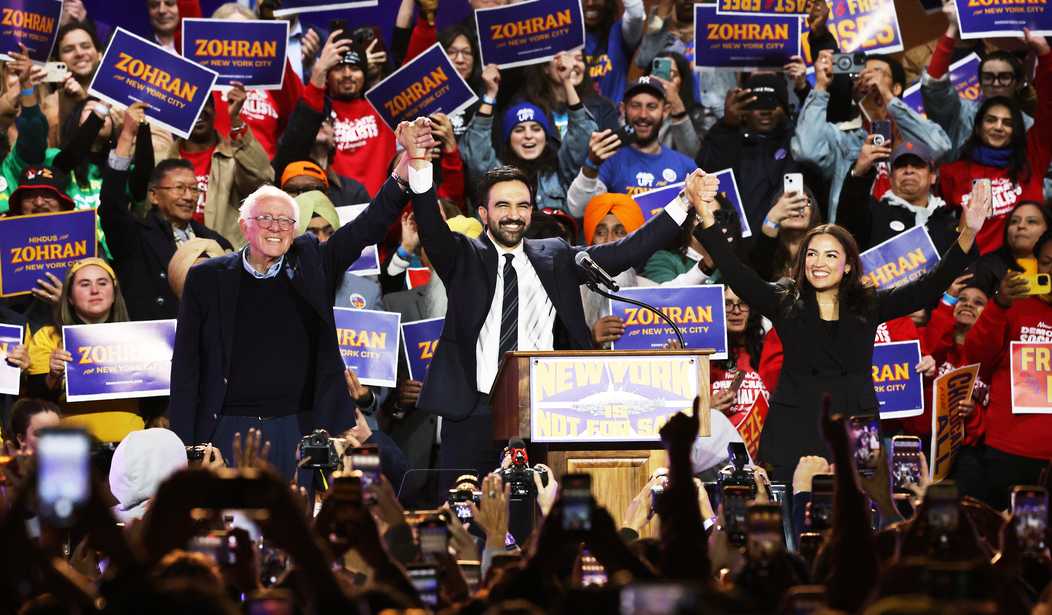
Some of the problem is the lingering frustration among major donors over how their money was spent in the 2024 presidential election, when nominee Kamala Harris quickly raised more than $1 billion but still lost after a rushed process to nominate her. Others point to the painful divisions in the Democratic Party’s donor base over the war in Gaza, antisemitism in the U.S. and an insurgent group of Democratic socialists.
The scope of the revolt can be seen in the gaps opening up in these PACs and super-PACs. As the WSJ shows in a graphic on their site, the pro-Trump MAGA Inc super-PAC now has a $400 million war chest, far outstripping official campaign committees from both parties. However, there's no indication that donors are sending money to MAGA Inc as a way to bypass the RNC or Republican Party campaign committees:
- National Republican Senatorial Committee has a $56M/$41M edge over the Democratic Senatorial Campaign Committee
- The GOP's NRCC has $92.7M in the bank, compared to $79M for the DCCC
- The main PAC for Senate Republicans has $239 million on hand, almost 2:1 over Dems' $126M
- The main PAC for House Republicans has $142M on hand, while Dems' has $90M
Dem donors are not staying entirely on the sidelines, however. Instead, they have directed their funds to specific candidates, with the most stark result in Texas, where James Talarico now has $55 million on hand against Ken Paxton's $4 million. That is a result of a bitter Republican primary and the reluctance of donors to reward Paxton for challenging John Cornyn, which Republicans are trying to resolve before Labor Day. The problem is that Talarico has to spend almost half of that to convince black voters to get over their anger over Talarico's challenge to Jasmine Crockett. A lot of that financial advantage will get spent just to get the party back to the Colin Allred status quo ante, when Allred lost the election by almost ten points to Ted Cruz two years ago.
Donors are also pouring money into Senate races in Georgia and Ohio, but Democrats are running incumbents in those races, who are facing serious competition in red states too. Donors regularly pour money into these contests, including Texas, so this is not exactly news. In previous cycles, Democrats also had money advantages in the national committees and the PAC/super-PAC front as well. Republicans in these races may benefit from MAGA Inc and the other PACs in play, and they may also get more donors as the primaries end and they can raise general-election funds, which these incumbents have been doing all along. Those wide gaps may not last long, and the PAC support may make them even less relevant.
We have plenty of time between now and November for Democrat donors to change their minds, but for that money to be effective, it needs to arrive before Labor Day. There actually isn't that much time at all for Democrats to resolve their civil war, and there's a good chance that they will burn resources on bad bets in Texas, Michigan, and Wisconsin first.