Really? Really really? Color me a bit skeptical about this, but given the events of the last two weeks, perhaps more open to the concept now than I have been for months.
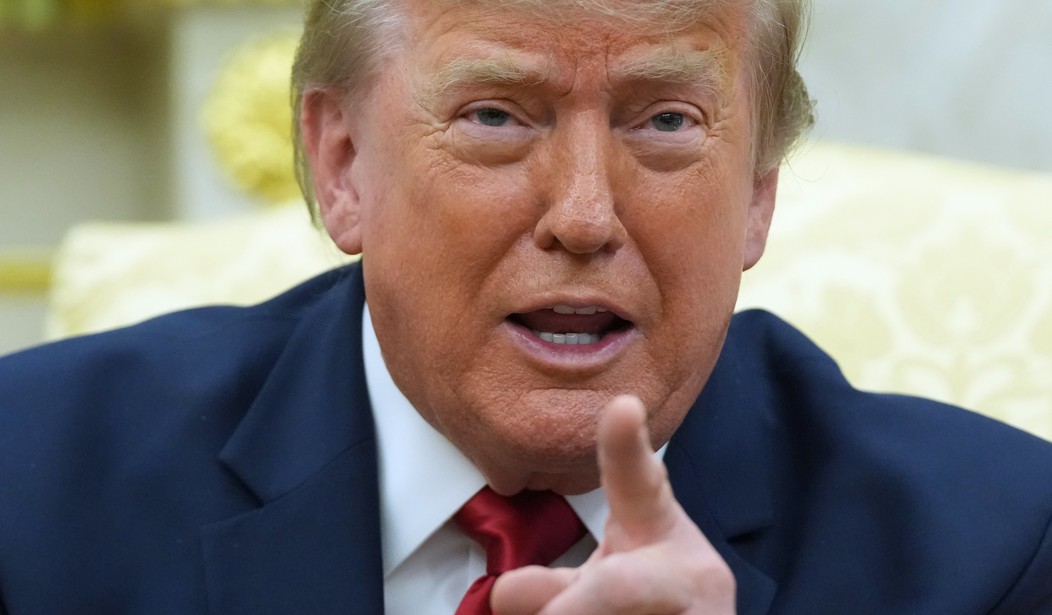
The president in recent days has grown skeptical that negotiations with Iran can produce a lasting peace, according to people familiar with the matter. A senior administration official said Trump believes that the only thing Iran understands is military force, adding that he was in “revenge mode” against Tehran. The president, the official said, sees few good options besides continuing strikes. ...
The U.S. is surging forces, medics and weaponry to the Middle East to give Trump more muscular military options should he choose to escalate. Iran has been able to weather previous waves of airstrikes, and a sustained U.S. military campaign risks further eroding munitions stocks and public support. ...
As the war lingers, Trump has grown less confident that the U.S. and Iran can find a diplomatic solution to the conflict. He has complained to advisers that it is difficult to know who speaks for top leadership, and every time the U.S. thinks it has made progress at the negotiating table, Iran continues its attacks, according to people familiar with the matter.
Advertisement
That explains why Trump has ordered thirteen straight nights of attacks on Iran without once discussing a potential negotiating session. That's significant in more than one way. At the end of the first active phase of the war, reports suggested that the US still had two weeks' worth of strategic targeting that would have left the IRGC's infrastructure in ruins and with a clear risk of total collapse. Trump paused the campaign to attempt to get the IRGC to bargain with the existential threat still dangling like a Sword of Damocles. It became clear, however, that the IRGC thought Trump wouldn't actually go any further, and successfully stalled for three months while attempting to rebuild its threat structure.
The Pentagon has just about had its two weeks now. Perhaps it still needs another few days after catching up to what the IRGC managed to repair during the ceasefire, but the original strategic plan has to be fairly close to complete now. If Trump is still planning to escalate after that, then revenge for perfidy may be the motive rather than just adding pressure for later negotiations.
But what will the escalation target? Kharg Island? The Spectator's Freddy Gray suggests that it may take place farther west:
The increased involvement of the Houthis, and the spreading economic damage, may well end up triggering a quick and more united western military response. Britain and others have in recent years been eager to support US-led bombing campaigns in Yemen. In January 2024, when Joe Biden was in power, a broad coalition of nations took part in Operation Poseidon Archer, a series of missions against Houthi targets, designed to protect shipping routes into the Gulf of Aden. And early into the second Trump administration, in March and May last year, US Central Command carried out Operation Rough Rider (remember Signalgate?) with a little help from the Royal Air Force. Now, the United Kingdom has a new Prime Minister, a new Defence Secretary, and a new keenness to reset the relationship with Washington after a painful few months.
It seems possible, then, that the latest ‘massive attack’ will begin, not with a US land grab on Kharg Island, but a more joint western-and-Gulf States effort closer to, and in support of, Saudi Arabia, with whom Trump just struck a surprising nuclear deal. The mission could be trumpeted as a sort of bellicose kumbaya moment for the fraying pro-western alliance. Trump may even, er, generously rescind the new tariffs he’s just imposed on the allies who’ve been willing to help. Quite how all that goes on to affect the Iran situation remains to be seen, but round and round we go.
Advertisement
Well, maybe, but a few points argue against it. First, the IRGC has traditionally absorbed hits to its proxies without much concern. Even wiping out the Houthis likely wouldn't soften their positions in Iran. Second, the Saudis could largely deal with the Houthis alone and directly, as long as the UN and the US stayed out of it. Third, I seriously doubt that Trump cares whether the UK participates in anything any longer. And fourth, it doesn't appear that the Houthis are stopping Red Sea traffic anyway:
The picture was less clear in the Red Sea, where some ships have turned around in the face of the Houthi threat but traffic did not seem to have slowed overall.
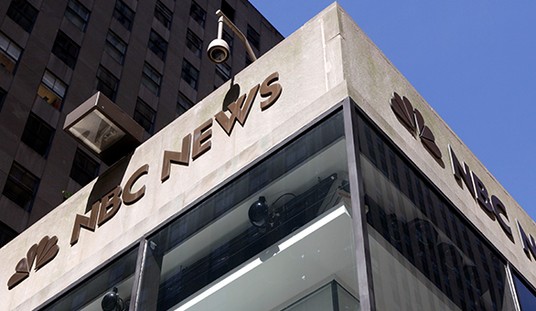
In the Bab el-Mandeb Strait on Thursday, 8 tankers travelled north through the chokepoint into the Red Sea, with 14 traveling south into the Gulf of Aden, according to an NBC News analysis of MarineTraffic data.
Some ships may have had their transmitters switched off, and so actual numbers may be higher.
Over the last couple of years, the Houthis had successfully slowed and even stopped traffic in the Bab el-Mandeb Strait. The US took them out of that strategy with a series of sharp reprisals, but even if that deterrent has lost its effectiveness, the operational environment has changed for the Houthis. Their targeting relied on data supplied by the Iranian navy's surface fleet, most of which is now permanently occupying sea floors, with the few ships left hiding in neutral ports. The Houthis can still threaten shipping generally, but their attacks will be much less effective, especially when the US Navy provides screening cover for it.
Advertisement
The question remains whether Trump has truly recognized the futility of dealing with terrorists and pirates and has resigned himself to seeing operations through to their obvious conclusion. It certainly looks as though Trump has had enough and wants to opt for regime collapse rather than buying the same carpet from it repeatedly and never receiving it. We've been here before, of course, but perhaps that means the lesson has landed at the White House about the nature of this enemy.
Editor's Note:For decades, former presidents have been all talk and no action. Now, Donald Trump is eliminating the threat from Iran once and for all.
Help us report the truth about the Trump administration's decisive actions to keep Americans safe and bring peace to the world. Join HotAir VIP and use promo code FIGHT to get 60% off your VIP membership.










Join the conversation as a VIP Member