As Brad Pitt once said ... What's in the box?
Over the last 30 hours or so, rumors of a deal with Iran transformed into real claims from the White House and mediators from Pakistan and Qatar. Reportedly, all nations in the region whose names don't rhyme with Schmisrael see it as a real end to hostilities and a return to full operations. But did this actually solve the security issues that started the war, or is Donald Trump signing onto a JCPOA II?
Axios' Barak Ravid gives us a peek at the terms, and Trump may have gotten what he wanted – or, at least, forced Iran to discuss it:
The agreement the U.S. and Iran are close to signing involves a 60-day ceasefire extension during which the Strait of Hormuz would be reopened, Iran would be able to freely sell oil, and negotiations would be held on curbing Iran's nuclear program, according to a U.S. official.
Why it matters: The deal would avoid an escalation of the war and decrease the pressure on the global oil supply. However, it's unclear whether it will lead to a lasting peace agreement that also addresses President Trump's nuclear demands.
If that's true, it's the first time that the IRGC regime has conceded anything about its nuclear-weapons program or its highly enriched uranium (HEU). That would be a significant shift in the talks; even the so-called "moderates" who went to the Islamabad conference refused to include those issues in their proposals. Masoud Pezeshkian at one point claimed the regime would never surrender its nuclear rights.
Is this any different? Well ...
The draft MOU includes commitments from Iran to never pursue nuclear weapons and to negotiate over a suspension of its uranium enrichment program and the removal of its stockpile of highly enriched uranium, the U.S. official said.
- According to two sources with knowledge, Iran gave the U.S. through the mediators verbal commitments about the scope of the concessions it's willing to make on suspending enrichment and giving up the nuclear material.
- The U.S. would agree to negotiate over lifting sanctions and unfreezing Iranian funds during the 60-day period — though those steps would only be implemented as part of a final agreement that is verifiably implemented.
In other words, we'll consider lifting sanctions and asset freezes in proportion to the IRGC's consideration on giving up its HEU and its nuclear-weapons ambitions. In other parts of the MOU, the US will agree to lift the blockade, but only in proportion to the IRGC's efforts to clear its mines from the international waters through the Strait of Hormuz and to stop harassing commercial shipping. According to Ravid, the principle that Trump insists on following is "relief for performance," and pointedly, verifiable performance.
One last point also seems important to consider:
U.S. forces that were mobilized in recent months would stay in the region during the 60-day period and only withdraw if a final deal is reached.
This may not be the Bridge and Power Day outcome that hawks had hoped to see. If this is accurate and it holds, it's not TACO Tuesday either. It leaves Trump with all of his options in place while keeping pressure on the regime to comply with the biggest and most dangerous threat it poses – the development of nuclear weapons. That is the true existential threat to Israel, not to mention other Gulf states that are now aligning with Israel and the US, and it would head off a nuclear arms race in one of the most unstable regions of the world.
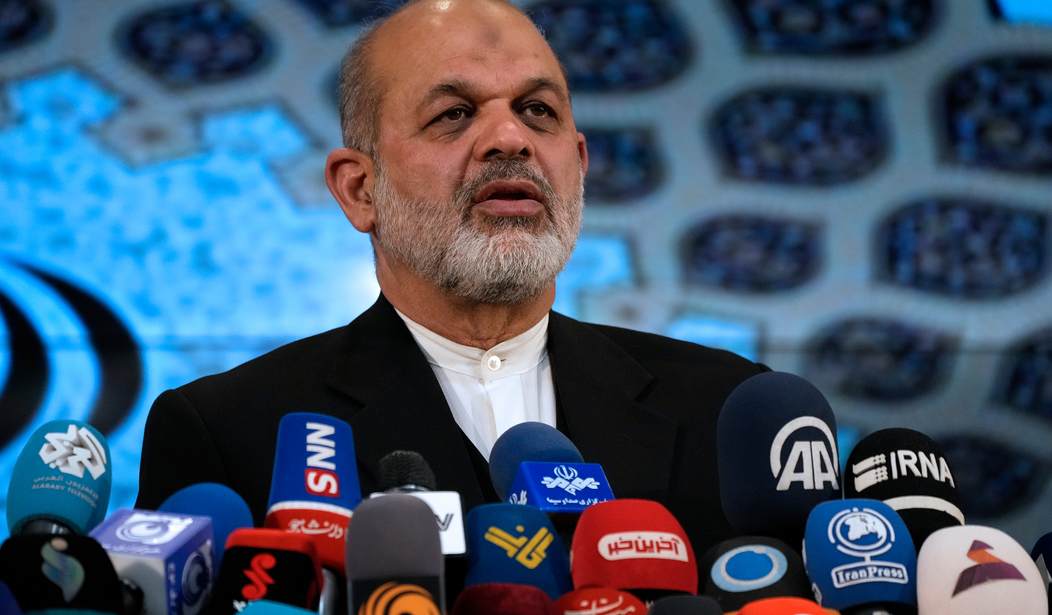
If it works. If it doesn't, Trump hasn't lost much but time in this agreement. And a failure by Ahmad Vahidi to adhere to this deal would make it easier for Trump to justify more kinetic action in the future.
The biggest downside here is the Iranian insistence on linking the war in Lebanon to the agreement:
The draft MOU also makes clear that the war between Israel and Hezbollah in Lebanon would end.
- Israeli Prime Minister Benjamin Netanyahu expressed concern about that condition during a phone call with Trump on Saturday, an Israeli official said. He also expressed concerns about other aspects of the deal, but made his case in a respectful and deferential way, a U.S. official said.
Even there, though, the MOU maintains the "relief for performance" principle:
- The U.S. official said it would not be a "one-sided ceasefire" and if Hezbollah tried to rearm or instigate attacks, Israel would be allowed to take action to prevent it. "If Hezbollah behaves, Israel will behave."
Ravid also reports that aside from Netanyahu, our allies in the Gulf unanimously support this deal, even the UAE, which has threatened to go to war separately against Iran over its attacks. If this is the framework, that makes sense. It doesn't take pressure off of Vahidi, who still has to drop his claims over the Strait before he sees any relief at all.
There are worse outcomes than this MOU, although we could probably have gotten a better one without the extended ceasefire in the first place. It's actually not much of a change at all. If Iran won't negotiate on the core issues, Bridge and Power Day can be rescheduled. If Vahidi reneges on the agreement, our mobilization will already be in place to impose consequences. I remain skeptical that Vahidi will negotiate anything in good faith, but the expectation of an end to the war may have its own domestic momentum in Iran, too. It could strengthen the IRGC in the short run, but if Vahidi blunders his way back into a shooting war, that could change in a hurry.
Update: Don't expect too many developments past these leaks for today. It sounds as though all sides are attempting to spin at the moment; the Iranians are claiming that they have not agreed to stop interfering in the Strait of Hormuz, but then again, they won't have to "agree" at this moment either.
Donald Trump just posted a statement to Truth Social that insists that he will not accept another JCPOA, and that the MOU would be the "exact opposite":
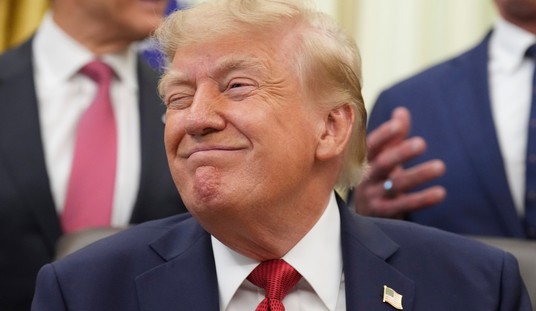
One of the worst deals ever made by our Country was the Iran Nuclear Deal, put forth and signed into existence by Barack Hussein Obama and the rank amateurs of the Obama Administration. It was a direct path to Iran developing a Nuclear Weapon. Not so with the transaction currently being negotiated with Iran by the Trump Administration - THE EXACT OPPOSITE, in fact! The negotiations are proceeding in an orderly and constructive manner, and I have informed my representatives not to rush into a deal in that time is on our side. The Blockade will remain in full force and effect until an agreement is reached, certified, and signed. Both sides must take their time and get it right. There can be no mistakes! Our relationship with Iran is becoming a much more professional and productive one. They must understand, however, that they cannot develop or procure a Nuclear Weapon or Bomb. I would like to thank, thus far, all of the countries of the Middle East for their support and cooperation, which will be further enhanced and strengthened by their joining the Nations of the historic Abraham Accords and, who knows, perhaps the Islamic Republic of Iran would like to join, as well! Thank you for your attention to this matter. President DONALD J. TRUMP
We'll know more when we see what's in the box, and whether the terrorists still have control.
Editor's Note: For decades, former presidents have been all talk and no action. Now, Donald Trump is eliminating the threat from Iran once and for all.
Help us report the truth about the Trump administration's decisive actions to keep Americans safe and bring peace to the world. Join HotAir VIP and use promo code FIGHT to get 60% off your VIP membership.








Join the conversation as a VIP Member