Or have the mullahs turned their eyes to ... Israel?
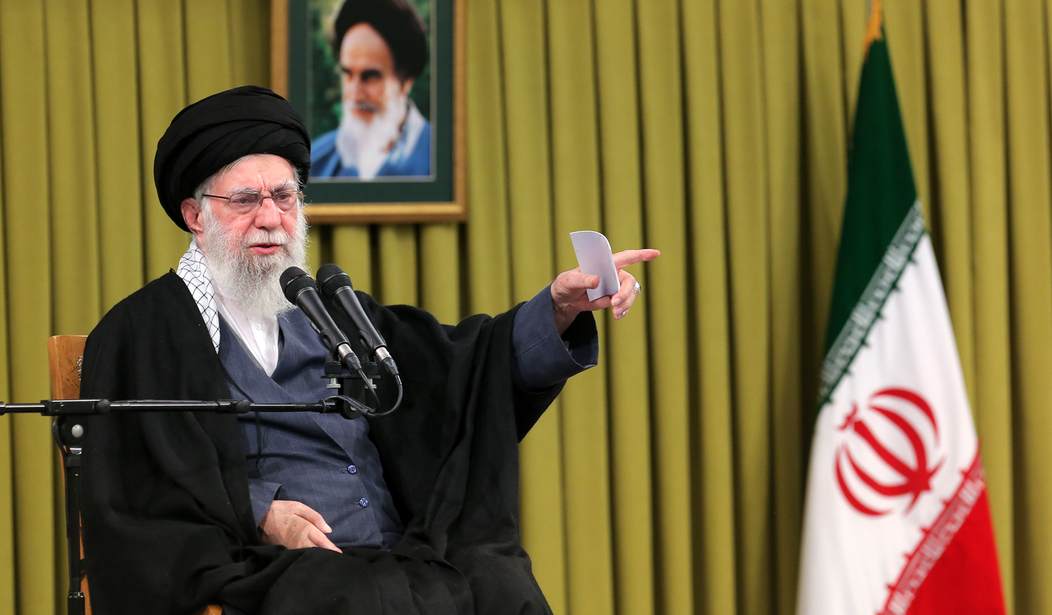
Right now, the Iranian regime finds itself besieged by a massive American military buildup in the Persian Gulf. The mullahs want to deflect and stall by offering concessions that strictly focus only on its nuclear-weapons program, a strategy that paid off with Barack Obama in 2015 but which Donald Trump mainly neutered in June 2025. The mullahs have managed to slow down Trump in this standoff with the help of neighboring states that do not want to deal with potential failed-state consequences of a collapse of power in Tehran.
Still, with the USS Gerald Ford carrier task force rapidly approaching the Persian Gulf, time is running out on the regime's refusal to give up its ballistic missiles and terror proxies. After the two-year catastrophe of the war touched off by Hamas in its October 7 massacres, Iran finds itself exposed and alone, too. Israel's destruction of Hezbollah in the war led directly to the fall of Bashar al-Assad and the defensive shield Syria provided Iran for decades. Their terror proxies have no real ability to deflect a major American military operation.
And as the Wall Street Journal reports, the Iranians find themselves short on friends at the moment ... to their shock and dismay:
Iran has sought for years to build closer military ties with China and Russia, but its powerful friends are proving reluctant to step forward as the regime faces the most acute U.S. threat to its survival in decades.
Russia and Iran conducted small-scale joint naval training in the Gulf of Oman this past week, a show of force dwarfed by the U.S. firepower assembled in the region at sea and on land. An exercise involving ships from China, as well as Russia and Iran, is planned to take place soon in the Strait of Hormuz, according to Iranian state media.
Iran has also sought to rebuild its missile stockpile, air defenses and other capabilities with help from both China and Russia, according to analysts, after those elements of its military power were battered in a 12-day war against Israel and the U.S. in June.
But Beijing and Moscow have shown little willingness to provide direct military assistance if President Trump does order an attack on Iran, analysts said.
Iran's strategy might have cowed Joe Biden and the Biden Regency. That strategy may have even been more rational before February 2022, when Vladimir Putin tried – and then utterly failed – to seize Ukraine in a massive invasion. It's not going to deter Donald Trump from settling the Iran question, if necessary, as he made clear last summer in the strikes that took out Iran's nuclear-weapons development sites in Fordow, Isfahan, and Natanz.
Right now, the Russians need Iran more than they can help Iran, and everyone knows it. The Russian military has been exposed as poorly led and maintained, lacking combined-arms expertise, and is surviving this war based solely on brute-force numbers that would have no application in a defense of Iran. Their technology for defense has been exposed as completely insufficient against American technology, not just in Iran itself last June but also in Venezuela last month. Russia is highly reliant on Iranian drones in its Ukraine quagmire, although the Israelis took a lot of that manufacturing capacity off the table last summer in the Twelve Day War, and the coming strikes makes the reduced output more critical for Iran's own defenses than in servicing their fair-weather Moscow friends.
As for China, they don't need to fight the US over Iran. They are still reluctant to fight the US over Taiwan, and the recent demonstrations of American military tech and prowess likely has them even less inclined to test us. They can buy oil on the legitimate market or from Russia on the side. Iran only mattered when Obama and Biden wanted to abandon the region and allow Russia and China to control it by default. Unlike Russia, China doesn't lack for warm-water access for its navy.
That leaves Iran to face down Trump alone, and the longer they refuse to discuss ballistic missiles and terrorism, the lonelier they will get. Turkey and Saudi Arabia are pushing Trump to cut a deal, but Trump has always rejected the JCPOA as the worst deal ever because it didn't address the other threats (and only postponed the development of nuclear weapons, let alone lacked verification power). At some point, the Saudis – who want Iran's proxies dismantled almost as much as the Israelis do – will get tired of the Iranian regime's obstinacy, even if Turkey doesn't. And tactically, the Saudis matter a lot more than Turkey.
The situation is dire enough for ordinary Iranians that they are reportedly hoping that Israel will take the lead on any strike rather than the US:
Iranians, while "waiting every minute and second" for a US strike against the Islamic Regime, would prefer an Israeli strike due to the precise nature of the Air Force's strikes in June, while there is a perception that US strikes would "bring terrible destruction, like in Iraq and Afghanistan," a local, identified as Ali told KAN Reshet Bet on Sunday.
Ali added that the Israeli strikes in June focused on targeted hits against "the mercenaries of the Islamic Revolutionary Guard Corps" and the Iranian regime's leadership, and did not cause harm to "ordinary citizens" or any economic infrastructure. ...
Further, he added that Prime Minister Benjamin Netanyahu has grown in popularity in Iran, with everyone calling him "Bibi-Gol [Bibi the flower]," while telling Ben-Ami that he has been learning Hebrew and that the regime has kept Hebrew-learning platforms open.
That may not be much comfort. The Jerusalem Post reports that Israel envisions its part in any upcoming operations as larger in scope than the Twelve Day War, especially if the Iranians launch a pre-emptive strike with its ballistic missiles:
Israel will reply with "unimaginable" force if Iran's Islamic regime launches an attack on Israel, Prime Minister Benjamin Netanyahu warned on Monday evening.
Speaking at a 40-signature debate at the Knesset, the prime minister said Israel was facing "very complex and challenging days,” amid ongoing tensions with Iran, and was prepared to respond to any threat.
“We are vigilant and prepared for every scenario. I have made it clear to the Ayatollah regime that if they make perhaps the gravest mistake in their history and attack Israel, we will respond with a force they cannot imagine,” he said.
Whatever happens, it will likely happen this week, although probably not before the State of the Union address tomorrow. Trump is still trying to force the mullahs to concede on missiles and terrorism, and he'd clearly prefer that to a strike, but the momentum of this buildup probably requires some demonstration of power. At the same time, the protests are starting again, and they may force the IRGC and the Basij to cross Trump's red line at a time when Trump has all of his options open for enforcing it, unlike in early January. The Ford task force will arrive in the Gulf later in the week, at which point all of the pieces will be in place ... and time will likely have run out on the mullahs.