






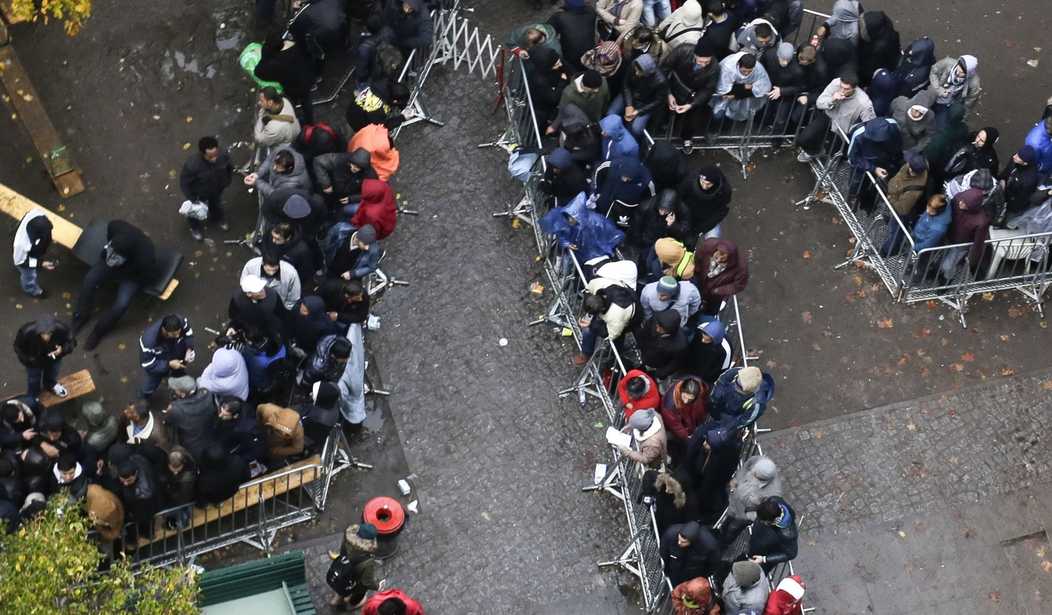

Europe's economy is sclerotic for many reasons, but one is simple: more takers than makers, plus the one-two punch of mass migration from the Third World, low-skill economies, and a dive-bombing birth rate, means things will only get worse.
The other day I noticed this post from Luis Garicano, a professor at the London School of Economics and former Member of the European Parliament. He was responding to the idiotic claims that the riots in France were a response to the increasing fiscal austerity there and in other European countries.
If only these countries were more generous to their populations, spent more on...everything...people would be living in a socialist utopia. The riots are the just deserts of living in a heartless capitalist world, don'tcha know.
Oh, bulls**t, Garicano argues.
The biggest, and stupidest, myth in European politics, particularly popular in France, is that Europe suffers the consequences of "austerity" and "neoliberalism". In the biggest 5 countries in Europe, more than half of the population makes its income from the state, less than half from the private sector. This is what makes the problem of reducing the welfare state so impossible: more than half of the voters are net recipients. No surprise that Italy's budget has not been balanced in 100 years, France's in 50 years (ooh la la, l'austérité!!): -France: 30 million from the state versus 21m private sector workers. State spending is 57% of GDP, taxes more than half the economy. The budget hasn't been balanced in the lifetime of most French (since 1974). - Germany: 35 million adults from the state, versus 34 million from the private sector. 10% of the population is registered as severely disabled. Public spending is over half of GDP. Germany has had a continuous budget deficit since 2019. -Italy: 23 million from the state, versus 20.5 million private-sector workers. Public spending is 51% of GDP. Italy has had a budget deficit every year since 1925, for 100 years. - Spain more people get their income from the state since 2024: 18.21 million from the public sector versus 17.9 million people working in the private sector. Since 2025, Spain also had more government employees than self-employed workers (autónomos) for the first time in history. State spending is at 45%, budget has not been balanced since 2007. - UK: 54% of households now receive more in state benefits than they pay in taxes. State spending is 44.5% of GDP, taxes (40%) are at their highest since 1950, the budget hasn't been balanced since 2001, and 1 in 5 new cars is paid by the government through a bizarre state disability scheme (Motability).
— Luis Garicano 🇪🇺🇺🇦 (@lugaricano) October 16, 2026
The biggest, and stupidest, myth in European politics, particularly popular in France, is that Europe suffers the consequences of "austerity" and "neoliberalism". In the biggest 5 countries in Europe, more than half of the population makes its income from the state, less than half from the private sector. This is what makes the problem of reducing the welfare state so impossible: more than half of the voters are net recipients. No surprise that Italy's budget has not been balanced in 100 years, France's in 50 years (ooh la la, l'austérité!!):
-France: 30 million from the state versus 21m private sector workers. State spending is 57% of GDP, taxes more than half the economy. The budget hasn't been balanced in the lifetime of most French (since 1974).
- Germany: 35 million adults from the state, versus 34 million from the private sector. 10% of the population is registered as severely disabled. Public spending is over half of GDP. Germany has had a continuous budget deficit since 2019.
-Italy: 23 million from the state, versus 20.5 million private-sector workers. Public spending is 51% of GDP. Italy has had a budget deficit every year since 1925, for 100 years.
- Spain more people get their income from the state since 2024: 18.21 million from the public sector versus 17.9 million people working in the private sector. Since 2025, Spain also had more government employees than self-employed workers (autónomos) for the first time in history. State spending is at 45%, budget has not been balanced since 2007.
- UK: 54% of households now receive more in state benefits than they pay in taxes. State spending is 44.5% of GDP, taxes (40%) are at their highest since 1950, the budget hasn't been balanced since 2001, and 1 in 5 new cars is paid by the government through a bizarre state disability scheme (Motability).
European countries are spending themselves into oblivion, and regulatory states that stifle innovation and productivity are accelerating the decline with all the regulatory brakes they put on economic activity.
And there are fewer, more obvious misuses of resources than the fact that European countries pay people not to work, turning potential makers into takers who drag on the economy.
Before you get your undies in a bunch about how no civilized society should let anybody starve in the streets, quit gaslighting us. Nobody is talking about starving people to death. We are talking about something that any sane person should understand is damaging: taking able-bodied people out of the workforce, handing them food, housing, money allowances, and no expectation of having to work. That's how so many people have the time to go out into the streets and complain they aren't getting enough.
Not everyone Garicano talks about is living off the dole. Some are pensioners, although the retirement age in France is so low I could be at a cafe sipping a cappuccino right now rather than slaving away at my keyboard, and some are overpaid bureaucrats who sit at desks laconically telling businessmen "Nón."
All told, though, these are people who drain money from the private sector for good or bad reasons, and the people in the private sector have to pick up the bill. The math doesn't math.
Ironically, one of the reasons why everybody in the transnational elite is so determined to import Third Worlders in vast numbers is to keep the system afloat. They will often argue that precise point, in some form or another. Even most liberals in power understand the basic fact that a fiscal cliff is coming, or even passed, and that we are all doing a Wile E. Coyote move of not looking down, hoping to keep floating above the canyon.
The migrants are supposed to increase the ratio of people working to those who aren't, keeping the system alive.
Only...it isn't working out. Many, and probably most of the migrants are welfare recipients, even if they do some work. Most countries refuse to study, or at least release studies, of the net costs or benefits from immigration, but a few do, and the news is grim. Migrants from the Third World are the most costly people in those countries, and it doesn't get better in the second or third generation.
People aren't generic; a migrant from a European country, or even better, the United States, contributes more to the economy and pays more in taxes than the average native. The opposite is true for your average Somali, Turk, or Afghan.
Who could have guessed?
The thing is, Europe isn't the most attractive place to migrate to if you want to get ahead. Aside from a few standouts, starting a business is hard and time-consuming; success will cost you dearly; access to capital is difficult, and the US is where the wealth is being created.
Eastern Europeans might prefer to live in Berlin or Paris, but generally, people who really want to migrate to Europe are looking for handouts.
Wile E. Coyote could hang in the air for a second or two, but gravity came for him, too. It turns out that no matter how many ways you try to persuade people to believe the math can math, it most certainly won't.
Unfortunately, as we have seen here, nobody wants to hear that their benefits will be reduced, so they find excuses to blame someone else for any problems. We all know Javier Milei's name because it was a miracle he was elected, and he has been producing miracles as president.
There is no sign that European leaders are willing to face reality. They are more likely to scapegoat others for the problems they caused, and they will no doubt try to keep the Third World flowing in, hoping it will suddenly make everything right.
Rome did the same thing, and it didn't work out too well. The policies can last far longer than you would expect out of sheer inertia, but what can't go on forever simply won't.