
Elon Musk is known for achieving what many mere mortals believe is impossible.
Last night, he unveiled the Tesla Roadster 2, and if you were on X, you couldn't avoid being bombarded with videos of the car doing the seemingly impossible. It can fly for short distances, do flips, drive upside down because it has suction fans that glue it to the road, and it can satisfy the cravings for coolness of any middle-aged man who ever lived.
Highlights of all four stunts Tesla showed off with the new Roadster today. https://t.co/chP6QEuVMk
— Oli (@CARN0N) October 16, 2026
We can argue about the practical value of any of those features, but if you aren't blown away by the sheer audacity and cool factor, then you need to get off your meds, drink a Red Bull, and scream "Hell Yeah!" ten times to get in the mood.
Elon famously booted up the reusable rocket market and turned a space industry that was expensive, hidebound, and limited to boutique customers into a mass market that puts thousands of satellites into space every year.
Now he is perfecting Starship, a reusable rocket that packs more power than a Saturn V, and has already delivered satellites while the rocket is still in beta. He's already reused a booster after steel chopsticks caught it from midair.
This is what it looks like when physics, software, and steel agree on the same answer. This breakdown shows how Starship manages its 33 engines during landing, using only a subset at touchdown before being caught by the chopsticks. https://t.co/WUi24FvkUa
— Kekius Maximus (@Kekius_Sage) February 7, 2026
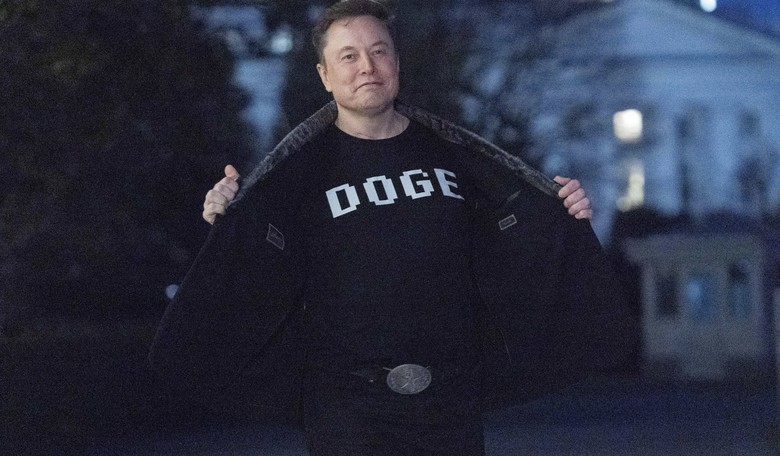
So it wasn't a surprise that President Trump tapped Elon to help reform the federal government, but after spending his time as a special government employee, most observers deemed his tenure a failure.
Elon can tame physics, but apparently bureaucracies are more stubborn in nature than the laws of nature.
DOGE worked. @elonmusk's Department of Government Efficiency (DOGE) cut more than 43,000 general administration, management, and “program analysis” positions—the sorts of middle-management jobs that previous government-slimming efforts have targeted. Other positions that saw large cutbacks included general attorneys, HR officials, clerks, and general business managers, each losing roughly 7,000 workers. DOGE also made smaller cutbacks across hundreds of types of federal positions, adding up to significant numbers. The government has eliminated 1,000 or more positions among public-affairs specialists, logistics managers, financial administrators, accountants, budget analysts, social-science analysts, and grants managers. It also lost about 100 interior designers and creative-arts therapists. @judgeglock writes: DOGE Achieved More than You Think https://t.co/knkFzxGmoK
— City Journal (@CityJournal) October 15, 2026
DOGE worked.@elonmusk's Department of Government Efficiency (DOGE) cut more than 43,000 general administration, management, and “program analysis” positions—the sorts of middle-management jobs that previous government-slimming efforts have targeted.
Other positions that saw large cutbacks included general attorneys, HR officials, clerks, and general business managers, each losing roughly 7,000 workers.
DOGE also made smaller cutbacks across hundreds of types of federal positions, adding up to significant numbers. The government has eliminated 1,000 or more positions among public-affairs specialists, logistics managers, financial administrators, accountants, budget analysts, social-science analysts, and grants managers. It also lost about 100 interior designers and creative-arts therapists.
Yet...perhaps the declarations of Elon's failure were premature. After all, the line on Elon is that he delivers the impossible, but late. His optimism is such that he doesn't just say, "Yeah, I can do that"; he says, "Yeah, I can do that by next month." It turns out the first part was true; the second... not so much.
Bro Tesla new roadster is out! We need a new vid! - by @bot https://t.co/6dTefznvH5
— ビクターVictor (@wwwkusakusakusa) October 16, 2026
Judge Glock in City Journal argues that disappointment with DOGE misses the fundamental changes it made to the federal government, the biggest of which was dramatically slimming down the bureaucracies.
Elon Musk’s Department of Government Efficiency (DOGE) went from an inside joke about a Musk-favored cryptocurrency, Dogecoin, to the biggest story in Washington to a near-nonentity—all in under a year. During DOGE’s whirlwind tour in power, the press highlighted its improbable promises of trillions of dollars in savings, its exaggerations of the savings it did achieve, and its occasional naivete about the politics and policy of Washington.
Yet the media spent so much time disputing DOGE’s claims that they largely ignored how it did change spending. In the end, while DOGE made only modest reductions in government contracting and a handful of cuts to government grants, it had a massive impact on the federal civil service. Before Trump took office, the civil service hit a modern peak of more than 2.3 million employees. Since then, it has shrunk by more than 270,000 people, a 12 percent drop—the fastest decline in federal employment since the end of World War II.
Reducing the number of bureaucrats and eliminating agencies like USAID matter a lot in the long run. While not every federal bureaucrat is a net drag on the economy — not by a long shot — on balance, the collective probably is. Sometimes we should trade efficiency for other values, like food safety, but often bureaucracies are little more than stumbling blocks to progress, or grossly inefficient at delivering results we all agree are good in principle but bad in practice.
Jasmine Crockett narrates the Tesla flying Roadster 😂 https://t.co/IoJy0nuSMP
— Western Lensman (@WesternLensman) October 16, 2026
If anybody had told you that in about a year the federal bureaucracy would drop by a tenth, you would have laughed in their faces. Bureaucracies are like mold — they just keep growing and spreading.
Yet Elon tamed the physics of government.
The media often portrayed DOGE as a way for Donald Trump to get back at agencies he disfavored and social programs he disliked. It would surprise many to learn that the biggest workforce reductions came at the former Department of Defense, now the Department of War. The department has over 85,000 fewer employees than it did at Trump’s inauguration, down more than 10 percent. The Trump administration and the Republican Congress have showered the department with largesse and expanded military purchases, but that hasn’t stopped DOGE and Trump from trimming its civilian headcount.
Though liberal-leaning agencies like Health and Human Services saw larger proportional shrinkage, every agency across the federal government took cuts. The Department of Veterans Affairs, another agency favored by Trump and Republicans, has 27,000 fewer employees today than it did pre-inauguration.
Looking beyond departments to the types of jobs eliminated, the biggest group by far, at over 43,000, consisted of general administration, management, and “program analysis” positions—the sorts of middle-management jobs that previous government-slimming efforts have targeted. Other positions that saw large cutbacks included general attorneys, HR officials, clerks, and general business managers, each losing roughly 7,000 workers. If you wanted to trim fat, these are the positions you’d start with.
DOGE also made smaller cutbacks across hundreds of types of federal positions, adding up to significant numbers. The government has eliminated 1,000 or more positions among public-affairs specialists, logistics managers, financial administrators, accountants, budget analysts, social-science analysts, and grants managers. It also lost about 100 interior designers and creative-arts therapists.
I think they went too far with the interior designers and creative-arts therapists, honestly. It's one thing to cut the fat; another to cut to the bone.
One area where Elon and company overpromised and under-delivered was in total savings, and the criticism is fair. They spent much of the money saved elsewhere, though not, as is so often the case, on hiring outside consultants to do what federal employees had previously done.
Remember when Gavin Newsom said Elon Musk was a disappointment? Aged like milk. https://t.co/WvPiII1d0I
— Jacktron (@jacktronprime) October 16, 2026
Instead, priorities changed, and in ways that generally made sense. You can argue about the total spend, but not whether it made sense to shift Pentagon spending from headcount to actual improvements in lethality.
In the past, most headcount reductions were cosmetic; these were not. Whether that is a temporary dip in federal employment and an inconsequential shift in how business is done will depend on who succeeds Trump. Reforming any organization is a monumental task, and the federal government has more inertia than a Ford-Class carrier. If Trump is succeeded by Rubio or Vance, the eight- or twelve-year trend will be dramatically different than if Trump is replaced by AOC or Gavin Newsom.
“I specialize in turning the impossible to just late.” — Elon Musk https://t.co/VrGVV2H5r0
— Dima Zeniuk (@DimaZeniuk) July 28, 2025
Whatever the case, it's pretty clear that DOGE accomplished at least some of what was intended, and that in spite of a full-on assault on every single move it made by the bureaucracy, the NGO complex, and the Democrats.
A few years from now, we may look back and decide that Elon delivered the impossible.
Elon makes the impossible merely late. @elonmusk told us at last year's 𝕏 Takeover: "I guess I specialize in going from the impossible to the merely late. So that's my skill. It wasn't possible, now it's just late." When Starship was first pitched, even people inside SpaceX thought it was impossible. Now the tower catches the booster. What's the next impossible he makes merely late?
— Tesla Owners Silicon Valley (@teslaownersSV) October 6, 2026
He just did it late.