
The evidence is pretty clear that, wherever he was and whatever kept Talarico off the campaign trail, he was not in a straitjacket in Ohio. As if anybody who checks himself into a mood disorder clinic voluntarily would be put in one.
Yet some people still cling to the belief that there is significant evidence Talarico really was there, although that number has been diminishing over time.
There are a ton of problems with that, starting with the fact that we shouldn't believe things that aren't true, no matter how well they confirm our priors or how "useful" they are to our preferred narrative. I spend oodles and bundles of time trashing Pravda and the Democrats for spreading falsehoods or unlikely claims, and that's just because I like trashing those people.
It really is a bad thing, both for society and for the mental hygiene of the people who swallow the lies. In the long run, it also destroys the credibility of the people who spread the falsehoods. And, more importantly, what ought to be a shared reality based on facts becomes a world of tribes fiercely holding on to fantasy-based beliefs.
Lastly, and this should sink in to those who want to push the story despite its being on the shakiest of grounds, the people who pushed this story managed to destroy a legitimate issue that should have been front and center: where WAS James Talarico during his absence (perhaps he had the flu, perhaps not), and more bizarrely, why did his entire campaign go dark instead of explaining the disappearance and sending out a slew of proxies to keep his momentum going? His flu would have been a non-issue; the disappearance was a genuinely important story.
Jessie Singal, with whom I often differ, wrote a piece that made some really good points about the shared-reality question. His framing intrigued me: reality is micro-fracturing, with people driven into increasingly small social circles where in-group biases reinforce even absurd beliefs. It's as if more and more cults are being created.
“Seven men drugged and gang raped a 20-year-old woman,” said Rep. Alexandria Ocasio-Cortez recently. She was giving a speech in Ithaca, New York, and the subject, naturally, was the scandal at Cornell University centering on the alleged sexual assaults of a woman named “Jane Doe.” (Her name has been made public but she, like the men she has accused, has received death threats, so I’m not going to use it.)
Ocasio-Cortez’s description of what happened was as lurid as it was terrifying. “They lured her into a fraternity house,” she said. “They drugged her with ketamine. They then posted to a group chat that she was incapacitated, and seven men took turns gang raping her for seven hours.”
As Fox News and others subsequently pointed out, Ocasio-Cortez’s description of what happened isn’t true—at least not if you believe Doe herself. The legal complaint she filed, thrusting her case into the national spotlight, paints an extremely disturbing picture, but one that’s significantly more complex than Ocasio-Cortez’s. Doe does accuse some of the men of rape, and multiple institutions of not properly investigating it or disciplining her alleged rapists, but she also acknowledges a complicated series of events that began with consensual (albeit inebriated) group sex, and that devolved from there. The hourslong episode was significantly fuzzed up by heavy drinking and ketamine use. That’s important to note not because it excuses any immoral or illegal behavior that occurred, but because it makes it difficult to know exactly what did occur—especially in light of points of disagreement between Doe and the men she has accused.
But if you get your news and analysis from certain sources—including a sitting U.S. representative—you might come to believe otherwise, that this is quite straightforward. “Even if Doe was willingly wasted beyond belief, that doesn’t make it okay for seven men to spend hours raping her,” wrote Jessica Valenti, a widely read feminist commentator.
In these communities, the “facts” of the Jane Doe case are closely linked to beliefs about the case: Seven frat bros raped her, and then both the university and police callously disregarded her. As the lefty outlet Common Dreams summed things up in an article covering Ocasio-Cortez’s statement, this all points to “a culture in which students accused of sexual assault are ‘protected’ while survivors like the woman in the Cornell case, identified as Jane Doe, are often forced out of their campus communities.”
If this isn’t exactly what happened—shouldn’t that matter? Shouldn’t we at least be able to get on the same page when it comes to the basic facts of what the accusations are?
We've always lived with spin and partisans emphasizing certain parts of stories, and I think the latter is defensible because we don't all agree on which facts matter most. If you looked at a gorgeous sunset on the beach and started talking about the number of grains of sand you were standing on, people would think you were missing the point of the moment, even if you were discussing an actual real-world question. It's perfectly fine to disagree on what facts matter.
What isn't fine is inventing facts, yet that is increasingly common, and the "micro-fracturing" of reality means crazy conspiracy theories become the fact base for many people, and for a larger cross-section of the population. Lefties believe that Trump is a Nazi and called white supremacists "fine people," which did not happen.
Singal's point about the cult-like nature of this phenomenon is correct, but he lets the people who inject the false "facts" into people's minds off the hook. He portrays the problem as bottom-up, and I think that inverts reality.
His own example — AOC pushing a false interpretation of the Jane Doe case- proves my point. AOC is one of the prime producers of "false facts," and Pravda has built an entire business model on lying to people about what is real. Rachel Maddow's whole shtick is pushing idiotic beliefs, and that applies equally to the MS NOW channel. Ditto The View.
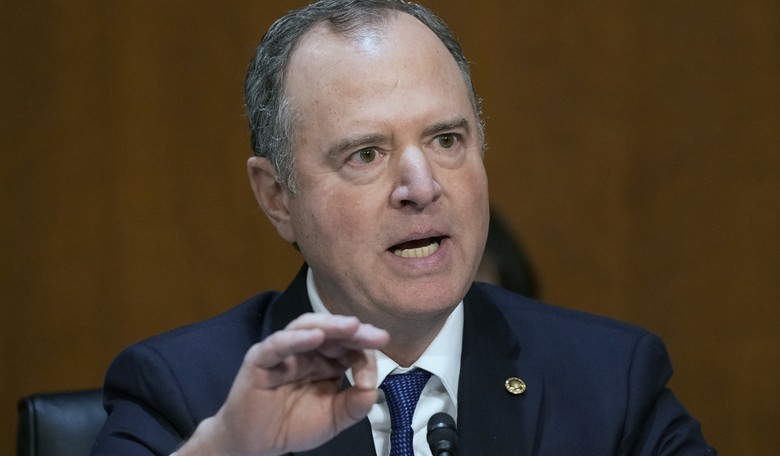
The Democrats send out "Designated Liars" like Adam Schiff, whose rise in prominence is entirely due to his willingness to act morally shocked about behavior that never happened.
Even the "Talarico was in a mental facility" claim gained momentum when prominent influencers pushed it.
@theGhostOfRiel At the very end was Megyn Kelly, refusing to let it go 😆 https://t.co/2ipZ4wgZw3
— J. Fall (@Seafloorese) October 12, 2026
People have always held kooky or implausible beliefs. Those beliefs spread virally when someone with inherent or implied credibility shares the meme. Almost nobody believes the Earth is flat, despite the idea being pushed forever, and that's because no sane influencer is making the argument. If Tucker Carlson did, a lot of his followers would pick up the idea and consider it plausible.
Micro-fracturing isn't organic; it is a business model.
Singal has diagnosed a real problem, but missed the cause of the disease.